Advertisements
Advertisements
प्रश्न
Explain whether a gas approaches ideal behavior or deviates from ideal behaviour if more gas is introduced into the same volume and at the same temperature.
Advertisements
उत्तर
When more gas is introduced into a container of the same volume and at the same temperature, the compressibility factor tends to unity. Hence, the gas behaves ideally.
APPEARS IN
संबंधित प्रश्न
Which of the following is the correct expression for the equation of state of van der Waals gas?
Maximum deviation from ideal gas is expected from
Which of the following diagrams correctly describes the behaviour of a fixed mass of an ideal gas? (T is measured in K)
In what way real gases differ from ideal gases.
Explain whether a gas approaches ideal behavior or deviates from ideal behaviour if it is compressed to a smaller volume at a constant temperature.
Explain whether a gas approaches ideal behavior or deviates from ideal behaviour if the temperature is raised while keeping the volume constant.
Which of the following gases would you expect to deviate from ideal behavior under conditions of low-temperature F2, Cl2, or Br2? Explain.
Write the Van der Waals equation for a real gas. Explain the correction term for pressure and volume.
Match the following graphs of ideal gas with their co-ordinates:
| Graphical representation | x and y co-ordinates |
(i) 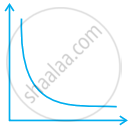 |
(a) pV vs. V |
(ii)  |
(b) p vs. V |
(iii)  |
(c) p vs. `1/V` |
In van der Waal's equation for the real gas, the expression for the net force of attraction amongst the gas molecules is given by:
