Advertisements
Advertisements
प्रश्न
Answer the following question.
β galactosidase enzyme is considered a better selectable marker. Justify the statement.
Advertisements
उत्तर
The selective marker is used in the selection of recombinants on the basis of the ability to produce colour in the presence of a chromogenic substrate. β-galactosidase is an enzyme that converts galactose into lactose. In this, a recombinant DNA is inserted within the coding sequence of enzyme, β-galactosidase, which results in inactivation of an enzyme referred to as "insertional inactivation".
The coding sequence for the enzyme β-galactosidase is preferred over antibiotic resistance genes because recombinants can be easily visualized.
APPEARS IN
संबंधित प्रश्न
Which of the following statement is not true for a clone?
Describe the role of CaCl2 in the preparation of competent cells?
Name the regions marked A, B and C.

Describe the role of Agrobacterium tumefaciens in transforming a plant cell.
The figure below shows the structure of a plasmid.
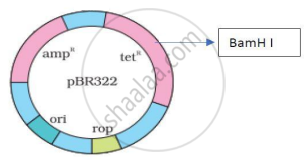
A foreign DNA was ligated at BamH1. The transformants were then grown in a medium containing antibiotics tetracycline and ampicillin.
Choose the correct observation for the growth of bacterial colonies from the given table.
Which of the following enzyme(s) are NOT essential for gene cloning?
- Restriction enzymes
- DNA ligase
- DNA mutase
- DNA recombinase
- DNA polymerase
Choose the correct answer from the options given below:
Which of the following is not a cloning vector?
What is the primary function of a vector in recombinant DNA technology?
What is the basic biological nature of plasmids when used as cloning vectors?
Which of the following is a group of vectors used for gene transfer into animals?
