Advertisements
Advertisements
प्रश्न
A shopkeeper sells three types of flower seeds A1, A2 and A3. They are sold as a mixture where the proportions are 4:4:2 respectively. The germination rates of the three types of seeds are 45%, 60% and 35%. Calculate the probability that it is of the type A2 given that a randomly chosen seed does not germinate.
Advertisements
उत्तर
Given that A1: A2: A3 = 4: 4: 2
∴ P(A1) = `4/10`
P(A2) = `4/10`
And P(A3) = `2/10`
Where A1, A2 and A3 are the three types of seeds.
Let E be the event that a seed germinates and `bar"E"` be the event that a seed does not germinate
∴ `"P"("E"/"A"_1) = 45/100 "P"("E"/"A"_2) = 60/100` and `"P"("E"/"A"_3) = 35/100`
And `"P"(bar"E"/"A"_1) = 55/100, "P"(bar"E"/"A"_2) = 40/100` and `"P"(bar"E"/"A"_3) = 65/100`
Using Bayes’ Theorem, we get
`"P"("A"_2/bar"E") = ("P"("A"_2)*"P"(bar"E"/"A"_2))/("P"("A"_1)*"P"(bar"E"/"A"_1) + "P"("A"_2)*"P"(bar"E"/"A"_2) + "P"("A"_3)*"P"(bar"E"/"A"_3))`
= `(4/10*40/100)/(4/10*55/100 + 4/10*40/100 + 2/10*65/100)`
= `(160/1000)/(220/1000 + 160/1000 + 130/1000)`
= `160/(220 + 160 + 130)`
= `160/510`
= `16/51`
= 0.314
Hence, the required probability is `16/51` or 0.314
APPEARS IN
संबंधित प्रश्न
Three persons A, B and C apply for a job of Manager in a Private Company. Chances of their selection (A, B and C) are in the ratio 1 : 2 :4. The probabilities that A, B and C can introduce changes to improve profits of the company are 0.8, 0.5 and 0.3, respectively. If the change does not take place, find the probability that it is due to the appointment of C
A laboratory blood test is 99% effective in detecting a certain disease when it is in fact, present. However, the test also yields a false positive result for 0.5% of the healthy person tested (that is, if a healthy person is tested, then, with probability 0.005, the test will imply he has the disease). If 0.1 percent of the population actually has the disease, what is the probability that a person has the disease given that his test result is positive?
An insurance company insured 2000 scooter drivers, 4000 car drivers and 6000 truck drivers. The probability of accidents are 0.01, 0.03 and 0.15 respectively. One of the insured persons meets with an accident. What is the probability that he is a scooter driver?
Suppose a girl throws a die. If she gets 1 or 2 she tosses a coin three times and notes the number of tails. If she gets 3,4,5 or 6, she tosses a coin once and notes whether a ‘head’ or ‘tail’ is obtained. If she obtained exactly one ‘tail’, what is the probability that she threw 3,4,5 or 6 with the die ?
Three machines E1, E2 and E3 in a certain factory producing electric bulbs, produce 50%, 25% and 25% respectively, of the total daily output of electric bulbs. It is known that 4% of the bulbs produced by each of machines E1 and E2are defective and that 5% of those produced by machine E3 are defective. If one bulb is picked up at random from a day's production, calculate the probability that it is defective.
A bag A contains 2 white and 3 red balls and a bag B contains 4 white and 5 red balls. One ball is drawn at random from one of the bags and is found to be red. Find the probability that it was drawn from bag B.
The contents of three urns are as follows:
Urn 1 : 7 white, 3 black balls, Urn 2 : 4 white, 6 black balls, and Urn 3 : 2 white, 8 black balls. One of these urns is chosen at random with probabilities 0.20, 0.60 and 0.20 respectively. From the chosen urn two balls are drawn at random without replacement. If both these balls are white, what is the probability that these came from urn 3?
Suppose 5 men out of 100 and 25 women out of 1000 are good orators. An orator is chosen at random. Find the probability that a male person is selected. Assume that there are equal number of men and women.
A letter is known to have come either from LONDON or CLIFTON. On the envelope just two consecutive letters ON are visible. What is the probability that the letter has come from
(i) LONDON (ii) CLIFTON?
An insurance company insured 2000 scooters and 3000 motorcycles. The probability of an accident involving a scooter is 0.01 and that of a motorcycle is 0.02. An insured vehicle met with an accident. Find the probability that the accidented vehicle was a motorcycle.
There are three coins. One is two-headed coin (having head on both faces), another is biased coin that comes up heads 75% of the times and third is also a biased coin that comes up tail 40% of the times. One of the three coins is chosen at random and tossed, and it shows heads. What is the probability that it was the two-headed coin?
In a factory, machine A produces 30% of the total output, machine B produces 25% and the machine C produces the remaining output. If defective items produced by machines A, B and C are 1%, 1.2%, 2% respectively. Three machines working together produce 10000 items in a day. An item is drawn at random from a day's output and found to be defective. Find the probability that it was produced by machine B?
A bag contains 1 white and 6 red balls, and a second bag contains 4 white and 3 red balls. One of the bags is picked up at random and a ball is randomly drawn from it, and is found to be white in colour. Find the probability that the drawn ball was from the first bag.
In a certain college, 4% of boys and 1% of girls are taller than 1.75 metres. Further more, 60% of the students in the colleges are girls. A student selected at random from the college is found to be taller than 1.75 metres. Find the probability that the selected students is girl.
There are three coins. One is two headed coin, another is a biased coin that comes up heads 75% of the time and third is an unbiased coin. One of the three coins is chosen at random and tossed, it shows heads, what is the probability that it was the two headed coin?
A is known to speak truth 3 times out of 5 times. He throws a die and reports that it is one. Find the probability that it is actually one.
A speaks the truth 8 times out of 10 times. A die is tossed. He reports that it was 5. What is the probability that it was actually 5?
In answering a question on a multiple choice test a student either knows the answer or guesses. Let \[\frac{3}{4}\] be the probability that he knows the answer and \[\frac{1}{4}\] be the probability that he guesses. Assuming that a student who guesses at the answer will be correct with probability \[\frac{1}{4}\]. What is the probability that a student knows the answer given that he answered it correctly?
A laboratory blood test is 99% effective in detecting a certain disease when its infection is present. However, the test also yields a false positive result for 0.5% of the healthy person tested (i.e. if a healthy person is tested, then, with probability 0.005, the test will imply he has the disease). If 0.1% of the population actually has the disease, what is the probability that a person has the disease given that his test result is positive?
There are three categories of students in a class of 60 students:
A : Very hardworking ; B : Regular but not so hardworking; C : Careless and irregular 10 students are in category A, 30 in category B and the rest in category C. It is found that the probability of students of category A, unable to get good marks in the final year examination is 0.002, of category B it is 0.02 and of category C, this probability is 0.20. A student selected at random was found to be one who could not get good marks in the examination. Find the probability that this student is category C.
A box contains 2 blue and 3 pink balls and another box contains 4 blue and 5 pink balls. One ball is drawn at random from one of the two boxes and it is found to be pink. Find the probability that it was drawn from second box
There is a working women's hostel in a town, where 75% are from neighbouring town. The rest all are from the same town. 48% of women who hail from the same town are graduates and 83% of the women who have come from the neighboring town are also graduates. Find the probability that a woman selected at random is a graduate from the same town
If E1 and E2 are equally likely, mutually exclusive and exhaustive events and `"P"("A"/"E"_1 )` = 0.2, `"P"("A"/"E"_2)` = 0.3. Find `"P"("E"_1/"A")`
A diagnostic test has a probability 0.95 of giving a positive result when applied to a person suffering from a certain disease, and a probability 0.10 of giving a (false) positive result when applied to a non-sufferer. It is estimated that 0.5% of the population are sufferers. Suppose that the test is now administered to a person about whom we have no relevant information relating to the disease (apart from the fact that he/she comes from this population). Calculate the probability that: given a negative result, the person is a non-sufferer
2% of the population have a certain blood disease of a serious form: 10% have it in a mild form; and 88% don't have it at all. A new blood test is developed; the probability of testing positive is `9/10` if the subject has the serious form, `6/10` if the subject has the mild form, and `1/10` if the subject doesn't have the disease. A subject is tested positive. What is the probability that the subject has serious form of the disease?
Solve the following:
The chances of P, Q and R, getting selected as principal of a college are `2/5, 2/5, 1/5` respectively. Their chances of introducing IT in the college are `1/2, 1/3, 1/4` respectively. Find the probability that IT is introduced in the college after one of them is selected as a principal
Suppose you have two coins which appear identical in your pocket. You know that one is fair and one is 2-headed. If you take one out, toss it and get a head, what is the probability that it was a fair coin?
Refer to Question 41 above. If a white ball is selected, what is the probability that it came from Bag 3
If 'A' and 'B' are two events such that A ⊂ B and P(B) ≠ 0, then which of the following is true :-
Three persons A, B and C apply for a job a manager in a private company. Chances of their selection are in the ratio 1:2:4. The probability that A, B and C can introduce chances to increase the profits of a company are 0.8, 0.5 and 0.3 respectively. If increase in the profit does not take place, find the probability that it is due to the appointment of A.
Read the following passage and answer the questions given below.
|
A shopkeeper sells three types of flower seeds A1, A2, A3. They are sold is the form of a mixture, where the proportions of these seeds are 4:4:2 respectively. The germination rates of the three types of seeds are 45%, 60% and 35% respectively.
|
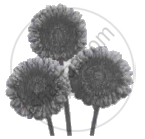
Based on the above information:
- Calculate the probability that a randomly chosen seed will germinate.
- Calculate the probability that the seed is of type A2, given that a randomly chosen seed germinates.
The Probability that A speaks truth is `3/4` and that of B is `4/5`. The probability that they contradict each other in stating the same fact is p, then the value of 40p is ______.
A jewellery seller has precious gems in white and red colour which he has put in three boxes.
The distribution of these gems is shown in the table given below:
| Box | Number of Gems | |
| White | Red | |
| I | 1 | 2 |
| I | 2 | 3 |
| III | 3 | 1 |
He wants to gift two gems to his mother. So, he asks her to select one box at random and pick out any two gems one after the other without replacement from the selected box. The mother selects one white and one red gem.
Calculate the probability that the gems drawn are from Box II.
Which expression gives Bayes' Theorem for \[P(B_i\mid A)\]?
Which conditions are specified for the probabilities in Bayes' Theorem?
What does prior probability mean?
In a typical Bayes' Theorem question, what is usually given in the question statement?
