हिंदी

NCERT solutions for फिज़िकल एजुकेशन एण्ड वेल-बीइंग खेल प्रवीण [अंग्रेजी] कक्षा ९ chapter 13 - Sports and Disability [Latest edition]

Chapters

NCERT solutions for फिज़िकल एजुकेशन एण्ड वेल-बीइंग खेल प्रवीण [अंग्रेजी] कक्षा ९ chapter 13 - Sports and Disability - Shaalaa.com
Advertisements
Advertisements

Solutions for Chapter 13: Sports and Disability

Below listed, you can find solutions for Chapter 13 of CBSE NCERT for फिज़िकल एजुकेशन एण्ड वेल-बीइंग खेल प्रवीण [अंग्रेजी] कक्षा ९.


Intext QuestionsExercises
Advertisements
Intext Questions [Pages 105 - 110]

NCERT solutions for फिज़िकल एजुकेशन एण्ड वेल-बीइंग खेल प्रवीण [अंग्रेजी] कक्षा ९ 13 Sports and Disability Intext Questions [Pages 105 - 110]

1.Page 105

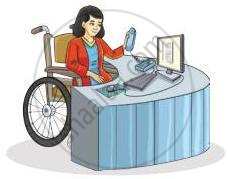
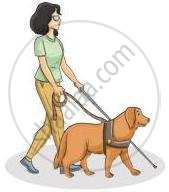
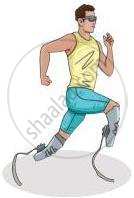
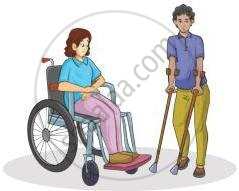
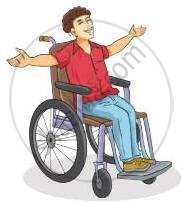
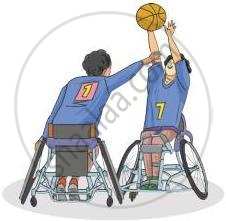
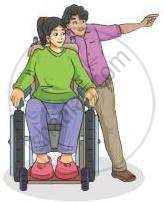
Look carefully at the Fig. showing people with different disabilities (wheelchair users, a person with a guide dog, an amputee athlete, etc.).

Discuss with your teacher and find out the list of 21 disabilities under the RPwD Act, 2016, and identify which types of disabilities you think are represented in the picture.

Example: Person using a wheelchair, Locomotor Disability. Person walking with a guide dog for Blindness or Low Vision.
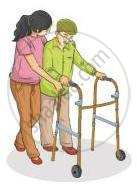
An educational illustration showing a young woman assisting an older man with a walker, supporting him from the side as he takes a step forward[cite: 1, 2]. They are both dressed in casual wear, on a simple ground against a light background with a subtle circular watermark[cite: 1, 2]. An educational illustration of a woman in a wheelchair working as a receptionist or office assistant at a curved desk, holding a telephone receiver. She wears a red cardigan and sits in front of a computer monitor, showcasing accessibility and workplace inclusion against a light background with a subtle circular watermark. An educational illustration showing two wheelchair basketball players in blue jerseys contesting for a basketball in mid-air. The player on the right (number 7) reaches upward to shoot or catch the ball, while the player on the left (number 1) extends an arm to defend.
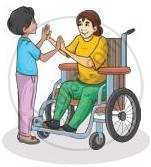
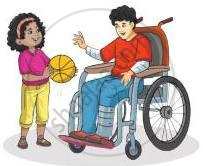
An educational illustration of a male para-athlete with bilateral prosthetic blade legs, running in an athletic pose with bent arms and a forward stride. He wears a yellow tank top, blue shorts, protective eyewear, and prosthetic running blades, showcasing inclusive sports against a light circular background with a subtle watermark. An educational illustration showing a young boy and a woman in a wheelchair giving each other a high-five against a light background with a subtle watermark[cite: 1, 2]. On the right, a smiling woman with dark hair sits in a wheelchair, wearing a yellow t-shirt and green trousers, raising her hands to meet those of a young boy standing in front of her in a blue t-shirt and pink trousers[cite: 1, 2]. They interact warmly on a light circular ground, highlighting social connection and inclusivity[cite: 1, 2]. An educational illustration showing a smiling girl in a pink top and yellow trousers offering a basketball to a boy seated in a wheelchair with a cast on his leg. The boy, wearing a red-and-white shirt and blue jeans, waves happily back against a light background with a subtle watermark, highlighting friendship and inclusive play.
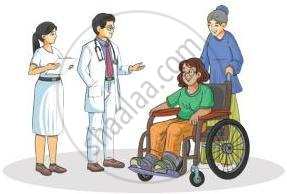
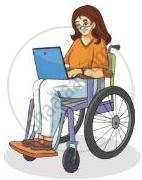
An educational illustration showing a medical consultation where a doctor in a white coat and stethoscope gestures as he speaks to a seated patient in a wheelchair[cite: 1, 2]. Behind the wheelchair, an older companion supports the patient, while a nurse on the left holds a clipboard and observes[cite: 1, 2]. They are set against a light background featuring a subtle circular watermark[cite: 1, 2]. An educational illustration of a smiling woman with glasses sitting in a wheelchair while working on a blue laptop resting on her lap. Dressed in an orange top and light blue trousers, she is depicted against a light background with a subtle circular watermark, highlighting accessibility and independent work. An educational illustration showing a woman in a blue top and pink trousers seated in a wheelchair alongside a young man in a purple shirt and yellow trousers standing with forearm crutches. Set against a light background with a subtle circular watermark, the image highlights mobility aids and inclusion.
An educational illustration showing a joyous young man seated in a wheelchair, laughing heartily with his arms spread wide in a celebration of freedom or triumph[cite: 1, 2]. Dressed in a red button-up shirt and blue jeans, he looks upwards with a jubilant expression against a light background featuring a subtle circular pattern and watermark, symbolizing inclusivity and empowerment[cite: 1, 2]. An educational illustration showing two wheelchair basketball players in blue jerseys contesting for a basketball in mid-air. The player on the right (number 7) reaches upward to shoot or catch the ball, while the player on the left (number 1) extends an arm to defend. An educational illustration showing a man in a purple shirt and brown trousers leaning over a wheelchair to point toward the distance, while a woman in a green sweater and purple trousers looks in that direction[cite: 1, 2]. The man has his hand resting on the back of the wheelchair, and both characters are shown smiling against a light background with a subtle circular watermark[cite: 1, 2].

Discuss in pairs or small groups

1. Which disabilities are visible in the image?

…………………………………...........................

2. Which disabilities are not visible but are still important (like learning disabilities, autism and blood disorders)?

…………………………………............................

Write down your answers below:

Visible Disabilities (shown in the picture) Invisible Disabilities (given in the list, but not shown in the picture)


LET US REFLECT

2. (i)Page 108
An educational illustration showing a young woman assisting an older man with a walker, supporting him from the side as he takes a step forward[cite: 1, 2]. They are both dressed in casual wear, on a simple ground against a light background with a subtle circular watermark[cite: 1, 2]. An educational illustration of a woman in a wheelchair working as a receptionist or office assistant at a curved desk, holding a telephone receiver. She wears a red cardigan and sits in front of a computer monitor, showcasing accessibility and workplace inclusion against a light background with a subtle circular watermark. An educational illustration showing two wheelchair basketball players in blue jerseys contesting for a basketball in mid-air. The player on the right (number 7) reaches upward to shoot or catch the ball, while the player on the left (number 1) extends an arm to defend.
An educational illustration of a male para-athlete with bilateral prosthetic blade legs, running in an athletic pose with bent arms and a forward stride. He wears a yellow tank top, blue shorts, protective eyewear, and prosthetic running blades, showcasing inclusive sports against a light circular background with a subtle watermark. An educational illustration showing a young boy and a woman in a wheelchair giving each other a high-five against a light background with a subtle watermark[cite: 1, 2]. On the right, a smiling woman with dark hair sits in a wheelchair, wearing a yellow t-shirt and green trousers, raising her hands to meet those of a young boy standing in front of her in a blue t-shirt and pink trousers[cite: 1, 2]. They interact warmly on a light circular ground, highlighting social connection and inclusivity[cite: 1, 2]. An educational illustration showing a smiling girl in a pink top and yellow trousers offering a basketball to a boy seated in a wheelchair with a cast on his leg. The boy, wearing a red-and-white shirt and blue jeans, waves happily back against a light background with a subtle watermark, highlighting friendship and inclusive play.
An educational illustration showing a medical consultation where a doctor in a white coat and stethoscope gestures as he speaks to a seated patient in a wheelchair[cite: 1, 2]. Behind the wheelchair, an older companion supports the patient, while a nurse on the left holds a clipboard and observes[cite: 1, 2]. They are set against a light background featuring a subtle circular watermark[cite: 1, 2]. An educational illustration of a smiling woman with glasses sitting in a wheelchair while working on a blue laptop resting on her lap. Dressed in an orange top and light blue trousers, she is depicted against a light background with a subtle circular watermark, highlighting accessibility and independent work. An educational illustration showing a woman in a blue top and pink trousers seated in a wheelchair alongside a young man in a purple shirt and yellow trousers standing with forearm crutches. Set against a light background with a subtle circular watermark, the image highlights mobility aids and inclusion.
An educational illustration showing a joyous young man seated in a wheelchair, laughing heartily with his arms spread wide in a celebration of freedom or triumph[cite: 1, 2]. Dressed in a red button-up shirt and blue jeans, he looks upwards with a jubilant expression against a light background featuring a subtle circular pattern and watermark, symbolizing inclusivity and empowerment[cite: 1, 2]. An educational illustration showing two wheelchair basketball players in blue jerseys contesting for a basketball in mid-air. The player on the right (number 7) reaches upward to shoot or catch the ball, while the player on the left (number 1) extends an arm to defend. An educational illustration showing a man in a purple shirt and brown trousers leaning over a wheelchair to point toward the distance, while a woman in a green sweater and purple trousers looks in that direction[cite: 1, 2]. The man has his hand resting on the back of the wheelchair, and both characters are shown smiling against a light background with a subtle circular watermark[cite: 1, 2].

After looking at the images, what did you understand about the types and degrees of disabilities?

2. (ii)Page 108

Why is it important to recognise that some disabilities cannot be 'seen' just by looking at a person?

3.Page 109

Which barrier do you think hinders participation the most? Discuss with your classmates and try to identify possible solutions.

Activity

4.Page 109

Match the following.

Barriers Solutions
(i) High cost of sports equipment (a) Provide school buses or special vans with wheelchair space
(ii) Lack of ramps or accessible playgrounds (b) Organise awareness programs and inclusive sports events
(iii) No transport to reach sports grounds (c) Encourage peer support and buddy systems
(iv) Not enough knowledge about opportunities (d) Gain access to government or NGO funding and donations for equipment
(v) Lack of friends' or family support (e) Build ramps, rails, and accessible sports facilities

Activity

1.Page 110

Pick one Paralympic value (Courage, Determination, Inspiration, or Equality) and create a poster showing how this value can be used in your own life (in school, sports, or at home).

2.Page 110

Blindfold some students and ask them to walk short distances guided by a partner. Give earplugs to a few students and ask them to communicate with gestures only. Ask others to write using their non-dominant hand.

Exercises [Page 110]

NCERT solutions for फिज़िकल एजुकेशन एण्ड वेल-बीइंग खेल प्रवीण [अंग्रेजी] कक्षा ९ 13 Sports and Disability Exercises [Page 110]

1.Page 110

Name the five broad categories of disabilities as recognised by the WHO and RPwD Act, 2016.

2. (i)Page 110

What are adapted sports? 

2. (ii)Page 110

How many sports are currently included in the Paralympic Games?

3.Page 110

Are accessible playgrounds important for inclusion? Justify.

Solutions for 13: Sports and Disability

Intext QuestionsExercises
NCERT solutions for फिज़िकल एजुकेशन एण्ड वेल-बीइंग खेल प्रवीण [अंग्रेजी] कक्षा ९ chapter 13 - Sports and Disability - Shaalaa.com

NCERT solutions for फिज़िकल एजुकेशन एण्ड वेल-बीइंग खेल प्रवीण [अंग्रेजी] कक्षा ९ chapter 13 - Sports and Disability

Shaalaa.com has the CBSE Mathematics फिज़िकल एजुकेशन एण्ड वेल-बीइंग खेल प्रवीण [अंग्रेजी] कक्षा ९ CBSE solutions in a manner that help students grasp basic concepts better and faster. The detailed, step-by-step solutions will help you understand the concepts better and clarify any confusion. NCERT solutions for Mathematics फिज़िकल एजुकेशन एण्ड वेल-बीइंग खेल प्रवीण [अंग्रेजी] कक्षा ९ CBSE 13 (Sports and Disability) include all questions with answers and detailed explanations. This will clear students' doubts about questions and improve their application skills while preparing for board exams.

Further, we at Shaalaa.com provide such solutions so students can prepare for written exams. NCERT textbook solutions can be a core help for self-study and provide excellent self-help guidance for students.

Concepts covered in फिज़िकल एजुकेशन एण्ड वेल-बीइंग खेल प्रवीण [अंग्रेजी] कक्षा ९ chapter 13 Sports and Disability are .

Using NCERT फिज़िकल एजुकेशन एण्ड वेल-बीइंग खेल प्रवीण [अंग्रेजी] कक्षा ९ solutions Sports and Disability exercise by students is an easy way to prepare for the exams, as they involve solutions arranged chapter-wise and also page-wise. The questions involved in NCERT Solutions are essential questions that can be asked in the final exam. Maximum CBSE फिज़िकल एजुकेशन एण्ड वेल-बीइंग खेल प्रवीण [अंग्रेजी] कक्षा ९ students prefer NCERT Textbook Solutions to score more in exams.

Get the free view of Chapter 13, Sports and Disability फिज़िकल एजुकेशन एण्ड वेल-बीइंग खेल प्रवीण [अंग्रेजी] कक्षा ९ additional questions for Mathematics फिज़िकल एजुकेशन एण्ड वेल-बीइंग खेल प्रवीण [अंग्रेजी] कक्षा ९ CBSE, and you can use Shaalaa.com to keep it handy for your exam preparation.

Share
Notifications

Englishहिंदीमराठी


      Forgot password?
Use app×