हिंदी

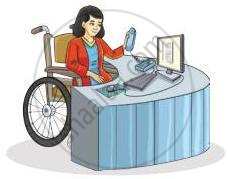
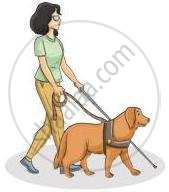
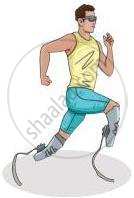
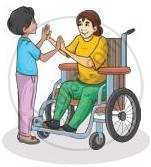
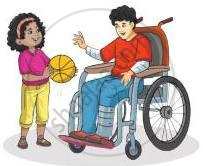
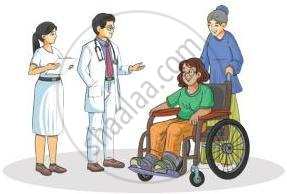
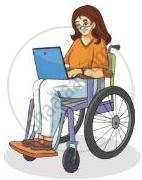
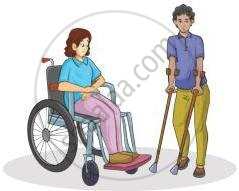
After looking at the images, what did you understand about the types and degrees of disabilities?

Advertisements

प्रश्न
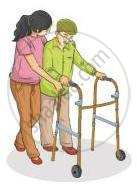
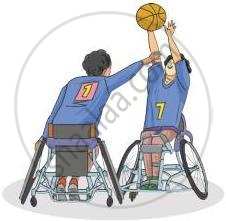
An educational illustration showing a young woman assisting an older man with a walker, supporting him from the side as he takes a step forward[cite: 1, 2]. They are both dressed in casual wear, on a simple ground against a light background with a subtle circular watermark[cite: 1, 2]. An educational illustration of a woman in a wheelchair working as a receptionist or office assistant at a curved desk, holding a telephone receiver. She wears a red cardigan and sits in front of a computer monitor, showcasing accessibility and workplace inclusion against a light background with a subtle circular watermark. An educational illustration showing two wheelchair basketball players in blue jerseys contesting for a basketball in mid-air. The player on the right (number 7) reaches upward to shoot or catch the ball, while the player on the left (number 1) extends an arm to defend.
An educational illustration of a male para-athlete with bilateral prosthetic blade legs, running in an athletic pose with bent arms and a forward stride. He wears a yellow tank top, blue shorts, protective eyewear, and prosthetic running blades, showcasing inclusive sports against a light circular background with a subtle watermark. An educational illustration showing a young boy and a woman in a wheelchair giving each other a high-five against a light background with a subtle watermark[cite: 1, 2]. On the right, a smiling woman with dark hair sits in a wheelchair, wearing a yellow t-shirt and green trousers, raising her hands to meet those of a young boy standing in front of her in a blue t-shirt and pink trousers[cite: 1, 2]. They interact warmly on a light circular ground, highlighting social connection and inclusivity[cite: 1, 2]. An educational illustration showing a smiling girl in a pink top and yellow trousers offering a basketball to a boy seated in a wheelchair with a cast on his leg. The boy, wearing a red-and-white shirt and blue jeans, waves happily back against a light background with a subtle watermark, highlighting friendship and inclusive play.
An educational illustration showing a medical consultation where a doctor in a white coat and stethoscope gestures as he speaks to a seated patient in a wheelchair[cite: 1, 2]. Behind the wheelchair, an older companion supports the patient, while a nurse on the left holds a clipboard and observes[cite: 1, 2]. They are set against a light background featuring a subtle circular watermark[cite: 1, 2]. An educational illustration of a smiling woman with glasses sitting in a wheelchair while working on a blue laptop resting on her lap. Dressed in an orange top and light blue trousers, she is depicted against a light background with a subtle circular watermark, highlighting accessibility and independent work. An educational illustration showing a woman in a blue top and pink trousers seated in a wheelchair alongside a young man in a purple shirt and yellow trousers standing with forearm crutches. Set against a light background with a subtle circular watermark, the image highlights mobility aids and inclusion.
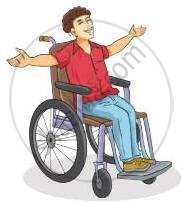
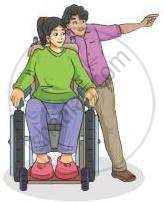
An educational illustration showing a joyous young man seated in a wheelchair, laughing heartily with his arms spread wide in a celebration of freedom or triumph[cite: 1, 2]. Dressed in a red button-up shirt and blue jeans, he looks upwards with a jubilant expression against a light background featuring a subtle circular pattern and watermark, symbolizing inclusivity and empowerment[cite: 1, 2]. An educational illustration showing two wheelchair basketball players in blue jerseys contesting for a basketball in mid-air. The player on the right (number 7) reaches upward to shoot or catch the ball, while the player on the left (number 1) extends an arm to defend. An educational illustration showing a man in a purple shirt and brown trousers leaning over a wheelchair to point toward the distance, while a woman in a green sweater and purple trousers looks in that direction[cite: 1, 2]. The man has his hand resting on the back of the wheelchair, and both characters are shown smiling against a light background with a subtle circular watermark[cite: 1, 2].

After looking at the images, what did you understand about the types and degrees of disabilities?

लघु उत्तरीय
Advertisements

उत्तर

The images show that disabilities can affect movement in different ways. Some people use wheelchairs, crutches, walkers or prosthetic limbs, while others may have different support needs. The images also show people participating in work, play and sports. A person’s exact disability or its degree cannot always be determined just by looking at an image.

shaalaa.com
  क्या इस प्रश्न या उत्तर में कोई त्रुटि है?
अध्याय 13: Sports and Disability - Intext Questions [पृष्ठ १०८]

APPEARS IN

एनसीईआरटी Physical Education and Well-being Khel Praveen [English] Class 9
अध्याय 13 Sports and Disability
Intext Questions | Q 2. (i) | पृष्ठ १०८
Advertisements
Share
Notifications

Englishहिंदीमराठी


      Forgot password?
Use app×