Advertisements
Chapters
1: Indian Economy on the Eve of Independence
2: Indian Economy 1950-1990
Unit 2: Economic Reforms since 1991
3: Liberalisation, Privatisation and Globalisation: An Appraisal
Unit 3: Current Challenges Facing the Indian Economy
▶ 4: Human Capital Formation in India
5: Rural Development
6: Employment: Growth, Informalisation and Other Issues
7: Environment and Sustainable Development
Unit 4: Development Experiences of India : a Comparison with Neighbours
8: Comparative Development Experiences of India and Its Neighbours
![NCERT solutions for इकॉनॉमिक्स इंडियन इकॉनॉमिक्स डेवलपमेंट [अंग्रेजी] कक्षा १२ chapter 4 - Human Capital Formation in India - Shaalaa.com](/images/economics-indian-economic-development-english-class-12_6:a654e356f641434097869c2416a05abb.jpg "NCERT solutions for इकॉनॉमिक्स इंडियन इकॉनॉमिक्स डेवलपमेंट [अंग्रेजी] कक्षा १२ chapter 4 - Human Capital Formation in India")
Advertisements
Solutions for Chapter 4: Human Capital Formation in India
Below listed, you can find solutions for Chapter 4 of CBSE NCERT for इकॉनॉमिक्स इंडियन इकॉनॉमिक्स डेवलपमेंट [अंग्रेजी] कक्षा १२.
NCERT solutions for इकॉनॉमिक्स इंडियन इकॉनॉमिक्स डेवलपमेंट [अंग्रेजी] कक्षा १२ 4 Human Capital Formation in India Intext Question [Pages 60 - 69]
Work This Out
Identify and collect the data from three families from different strata: (i) very poor, (ii) middle class and (iii) affluent. Study the expenditure pattern of the families on education of male and female children.
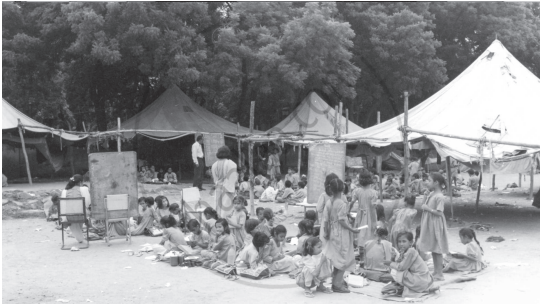
Look at the figure and discuss:
- What are the advantages of having a proper ‘classroom’?
- Do you think the children going to this school are receiving quality education?
- Why these schools do not have buildings?
Work This Out
If a construction worker, maid-servant, dhobi or a peon in school has absented herself/himself for long due to ill health, find out how it has affected her/his:
- job security
- wage/salary
What could be the possible reasons?
Identify the objectives and functions of NCERT, UGC, AICTE and ICMR.
Work These Out
Prepare case studies of dropouts at different levels of schooling, say
- Primary dropouts
- Class VIII dropouts
- Class X dropouts
Find out the causes and discuss in the class.
‘School dropouts are giving way to child labour’. Discuss how this is a loss to human capital.
NCERT solutions for इकॉनॉमिक्स इंडियन इकॉनॉमिक्स डेवलपमेंट [अंग्रेजी] कक्षा १२ 4 Human Capital Formation in India Exercise [Pages 72 - 74]
What are the two major sources of human capital in a country?
What are the indicators of educational achievement in a country?
Why do we observe regional differences in educational attainment in India?
Bring out the differences between human capital and human development.
How is human development a broader term as compared to human capital?
What factors contribute to human capital formation?
How government organisations facilitate the functioning of schools and hospitals in India?
Education is considered an important input for the development of a nation. How?
Discuss the following as a source of human capital formation
Health infrastructure
Discuss the following as a source of human capital formation
Expenditure on migration.
Establish the need for acquiring information relating to health and education expenditure for the effective utilisation of human resources.
How does investment in human capital contribute to growth?
There is a downward trend in inequality world-wide with a rise in the average education levels. Comment.
Examine the role of education in the economic development of a nation.
Explain how investment in education stimulates economic growth.
Bring out the need for on-the-job-training for a person.
Trace the relationship between human capital and economic growth.
Discuss the need for promoting women’s education in India.
Argue in favour of the need for different forms of government intervention in education and health sectors.
What are the main problems of human capital formation in India?
In your view, is it essential for the government to regulate the fee structure in education and health care institutions? If so, why?
SUGGESTED ADDITIONAL ACTIVITIES
Identify how Human Development Index is calculated. What is the position of India in the World Human Development Index?
Is India going to be a knowledge-based economy in the near future? Discuss in the classroom.
Interpret the data given in the table:
| Sl. No. |
Particulars | 1990 | 2000 | 2011 | 2017-18 |
| 1. | Adult Literacy Rate (per cent of people aged 15+) 1.1 Male 1.2 Female |
61.9 37.9 |
68.4 45.4 |
79 59 |
82 66 |
| 2. | Primary completion rate (per cent of relevant age group) 2.1 Male 2.2 Female |
78 61 |
85 69 |
92 94 |
93 96 |
| 3. | Youth literacy rate (per cent of people aged 15+ to 24 3.1 Male 3.2 Female |
76.6 54.2 |
79.7 64.8 |
90 82 |
93 90 |
As an educated person, what will be your contribution to the cause of education? (Example: ‘Each one, teach one’).
Enlist the various sources that provide information regarding education, health and labour.
Read the annual reports of Union Ministries of Education and Health and Family Welfare and make summaries. Read the chapter on social sector in the Economic Survey. These can be downloaded from websites of the respective Union Government Ministries.
Solutions for 4: Human Capital Formation in India
NCERT solutions for इकॉनॉमिक्स इंडियन इकॉनॉमिक्स डेवलपमेंट [अंग्रेजी] कक्षा १२ chapter 4 - Human Capital Formation in India
Shaalaa.com has the CBSE Mathematics इकॉनॉमिक्स इंडियन इकॉनॉमिक्स डेवलपमेंट [अंग्रेजी] कक्षा १२ CBSE solutions in a manner that help students grasp basic concepts better and faster. The detailed, step-by-step solutions will help you understand the concepts better and clarify any confusion. NCERT solutions for Mathematics इकॉनॉमिक्स इंडियन इकॉनॉमिक्स डेवलपमेंट [अंग्रेजी] कक्षा १२ CBSE 4 (Human Capital Formation in India) include all questions with answers and detailed explanations. This will clear students' doubts about questions and improve their application skills while preparing for board exams.
Further, we at Shaalaa.com provide such solutions so students can prepare for written exams. NCERT textbook solutions can be a core help for self-study and provide excellent self-help guidance for students.
Concepts covered in इकॉनॉमिक्स इंडियन इकॉनॉमिक्स डेवलपमेंट [अंग्रेजी] कक्षा १२ chapter 4 Human Capital Formation in India are Challenges and Future Prospects in Education, Concept of Human Capital, Sources of Human Capital, Human Capital and Human Development, State of Human Capital Formation in India, Growth of Education Sector in India, Human Capital and Economic Growth, Human Capital Formation in India - Conclusion, Concept of Human Capital, Sources of Human Capital, Human Capital and Economic Growth, Human Capital and Human Development, State of Human Capital Formation in India, Growth of Education Sector in India, Challenges and Future Prospects in Education, Environment and Sustainable Development in India, State of India’s Environment, Concept of Sustainable Development, Strategies for Sustainable Development, Rural Development in India, Credit and Marketing in Rural Areas, Agricultural Market System, Diversification into Productive Activities, Sustainable Development and Organic Farming, The Nature and Importance of Work in Society, Workers and Employment, Participation of People in Employment, Self-employed and Hired Workers, Employment in Firms, Factories and Offices, Growth and Changing Structure of Employment, Informalisation of Indian Workforce, Concept of Unemployment, Government and Employment Generation, Concept of Human Capital, Sources of Human Capital, Human Capital and Economic Growth, Human Capital and Human Development, State of Human Capital Formation in India, Growth of Education Sector in India, Challenges and Future Prospects in Education, Environment and Sustainable Development in India, State of India’s Environment, Concept of Sustainable Development, Strategies for Sustainable Development, Rural Development in India, Credit and Marketing in Rural Areas, Agricultural Market System, Diversification into Productive Activities, Sustainable Development and Organic Farming, The Nature and Importance of Work in Society, Workers and Employment, Participation of People in Employment, Self-employed and Hired Workers, Employment in Firms, Factories and Offices, Growth and Changing Structure of Employment, Informalisation of Indian Workforce, Concept of Unemployment, Government and Employment Generation.
Using NCERT इकॉनॉमिक्स इंडियन इकॉनॉमिक्स डेवलपमेंट [अंग्रेजी] कक्षा १२ solutions Human Capital Formation in India exercise by students is an easy way to prepare for the exams, as they involve solutions arranged chapter-wise and also page-wise. The questions involved in NCERT Solutions are essential questions that can be asked in the final exam. Maximum CBSE इकॉनॉमिक्स इंडियन इकॉनॉमिक्स डेवलपमेंट [अंग्रेजी] कक्षा १२ students prefer NCERT Textbook Solutions to score more in exams.
Get the free view of Chapter 4, Human Capital Formation in India इकॉनॉमिक्स इंडियन इकॉनॉमिक्स डेवलपमेंट [अंग्रेजी] कक्षा १२ additional questions for Mathematics इकॉनॉमिक्स इंडियन इकॉनॉमिक्स डेवलपमेंट [अंग्रेजी] कक्षा १२ CBSE, and you can use Shaalaa.com to keep it handy for your exam preparation.
