Advertisements
Chapters
2: Ownership Structures - Sole Proprietorship and Joint Hindu Family Business
3: Ownership Structures - Partnership
4: Ownership Structures - Joint Stock Company
5: Ownership Structures - Cooperative Society
6: Public Sector Enterprises
7: Functioning of a Commercial Organisation
8: Communication in a Commercial Organisation
9: Ways of Communicating
10: Tools of Communication
11: Nature and Terminology of Accounting
12: Accounting Records
13: Natural Resources
14: Depletion of Resources
15: Practices for Conservation of Resources
16: Industrial Pollution and Degradation of Environment
![C. B. Gupta solutions for कमर्शियल ऐप्लिकेशन [अंग्रेजी] कक्षा ९ आयसीएसई chapter 1 - Introduction to Commercial Organisations - Shaalaa.com](/images/commercial-applications-english-class-9-icse_6:e921a1ab181646959c8f7253711b2e9f.jpg "C. B. Gupta solutions for कमर्शियल ऐप्लिकेशन [अंग्रेजी] कक्षा ९ आयसीएसई chapter 1 - Introduction to Commercial Organisations")
Advertisements
Solutions for Chapter 1: Introduction to Commercial Organisations
Below listed, you can find solutions for Chapter 1 of CISCE C. B. Gupta for कमर्शियल ऐप्लिकेशन [अंग्रेजी] कक्षा ९ आयसीएसई.
C. B. Gupta solutions for कमर्शियल ऐप्लिकेशन [अंग्रेजी] कक्षा ९ आयसीएसई 1 Introduction to Commercial Organisations EXERCISES [Pages 17 - 21]
Objective Type Questions:
Which of the following statements is/are correct?
- Economic activities are undertaken with the purpose of earning money and acquiring wealth.
- Profession is an occupation involving rendering of expert services for a fee.
- Economic activities involve production and distribution of goods and services.
- Employment does not mean working under an employer for wage or salary.
Only (i) is correct.
Only (i), (ii) are correct.
(i), (ii) and (iii) are correct.
None of these
Which of the following is/are characteristics of economic activities?
- Economic activities we undertake to earn money income.
- Economics activities help to create wealth.
- Economic activities satisfy basic human needs such as food, clothing and shelter.
- Economic activities serve as the basis for economic development.
Only (ii)
(i) and (iii)
(iv), (ii), (iii)
All of these
What is the purpose of economic activities?
These activities are performed only for wage or salary.
These activities are not expected to create money income.
These activities are undertaken to earn a living through production and sale of goods and services.
These activities do not result in creation of wealth.
Statement I: Non-economic activities are undertaken not for earning money but for personal satisfaction.
Statement II: Non-economic activities involve social, religious, patriotic and non-financial motives.
Statements I and II are wrong.
Statement II is correct but I is wrong.
Statements I and II are correct but II is not an explanation of I.
Statements I and II are correct and II is an explanation of I.
Which of the following statements is/are correct?
All business activities involve sale or exchange of goods and services for some consideration.
Every business enterprise produces or buys goods and services for selling them to others.
The primary objective of a business is to earn money and acquire wealth.
All of these
Statement I: Business is regarded as an economic activity.
Statement II: The objective of business activities is to sell the goods and services for profit.
Both I and II are wrong.
I is correct and II is wrong.
Both I and II are correct but II is not an explanation of I.
Both I and II are correct and II is an explanation of I.
Which of the following statements is wrong regarding industry?
- Industry includes all those business activities which involve extracting multiplying growing, processing, assembling and constructing useful products.
- The term ‘industry’ refer to a group of firms producing similar or related goods.
- The business enterprises which undertake industrial activities are known as industrial enterprises.
- People who own and control industries are called manufacturers.
Only (i) is wrong.
Only (ii) is wrong.
(iv) is wrong.
All of them are wrong.
Which of the following statements is wrong regarding industry?
- Extractive industries are those industries which are concerned with the discovery and extraction of natural resources.
- Genetic industries are those industries which are concerned with reproducing and multiplying plants and animals.
- Manufacturing industries are those industries which are concerned with providing commercial services.
- Industries which employ complex technology and long production cycles are called heavy industries.
(i) is wrong.
Only (iii) is wrong.
(i), (ii), (iv) are wrong.
None of them
Which of the following hindrances does not arise in the exchange of goods and services?
Hindrance of production
Hindrance of time
Hindrance of risk
Hindrance of finance
Statement I: Trade means the sale, transfer or exchange of goods may be for cash or credit.
Statement II: Traders serve as link between producers and consumers.
Statement I is wrong.
Statement II is wrong.
Both I and II are correct but II is not an explanation of I.
Both I and II are correct and statement I is an explanation of II.
Entrepot trade means ______.
Importing goods from one or more countries with the purpose of exporting them to some other country or countries.
Purchasing goods and services from other countries.
Selling goods and services to other countries.
None of these
What is the meaning of ‘Organisation’?
An institutional arrangement to carry on some business activity.
It is an incorporated association of persons created by law.
A group of persons who join together to achieve some common objectives.
None of these
What is the nature of activity of banking and finance companies?
These organisations are engaged in designing and preparing advertisements.
These organisations are engaged in accepting deposits and lending money.
These organisations are engaged in storing and preserving goods on hire.
These organisations are engaged in buying and selling of goods.
These organisations are engaged in buying and selling of goods.
Banking and finance companies
Trading organisations
Transport organisations
Manufacturing organisations
Firms producing biscuits, breads, noodles, jam, soup powder, spices etc.
Food industry
Beverages industry
Personal care products industry
Home care products industry
What is the meaning of public accountability?
Money invested in public enterprises is public money and public sector enterprises are answerable to the public through the parliament.
Ultimate control of a public sector undertaking lies with the government.
Public sector undertakings are fully owned by government or some public authority.
None of these
Assertion (A): The agricultural sector is a primary industry.
Reasoning (R): It involves the extraction and production of raw materials directly from natural resources.
A is true but R is false.
A is false but R is true.
Both A and R are true and R explains A.
Both A and R are true but R does not explain A.
Assertion (A): Private sector enterprises focus primarily on profit maximization.
Reasoning (R): Profit motive is the driving force behind the decisions and operations of private businesses.
A is true but R is false.
A is false but R is true.
Both A and R are true and R explains A.
Both A and R are true but R does not explain A.
Statement I: A retailer delaying the purchase of seasonal goods for sale is addressing the hindrance of time in commerce.
Statement II: Warehousing solves the problem of storing goods until they are sold.
Both I and II are correct.
Both I and II are wrong.
Only I is correct.
Only II is correct.
Which of the following correctly distinguishes between commerce and trade?
Commerce involves production, while trade deals with distribution.
Commerce involves distribution and auxiliary services, while trade focuses on buying and selling goods.
Trade creates time utility, while commerce creates form utility.
Commerce is a subset of trade.
If an organisation is funded entirely by private individuals and operates solely for earning profits, it would be classified under public sector enterprises.
True
False
Identify the type of industry shown in the given image.

Genetic industry
Extractive industry
Analytical industry
Synthetical industry
A textile company produces cotton fabrics and sells them to wholesalers who distribute the goods to retailers across the country. The company also advertises its products to create brand awareness. What hindrance does advertising primarily aim to remove in this case?
Hindrance of place
Hindrance of knowledge
Hindrance of finance
Hindrance of risk
An entrepreneur faces financial losses due to a natural disaster that damages their inventory. Which auxiliary to trade could have mitigated this loss?
Transportation
Warehousing
Insurance
Banking
An insurance company compensating a trader for loss due to fire is an example of removing the hindrance of finance.
True
False
Identify the type of industry shown in the given image.
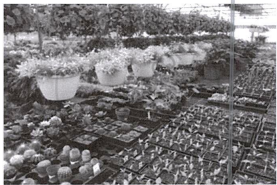
Genetic industry
Extractive industry
Analytical industry
Synthetical industry
Which of the following correctly represents the interdependence of industry, commerce, and trade.
Commerce is independent of industry, while trade depends on industry.
Industry creates goods, commerce distributes them, and trade facilitates their exchange.
Trade relies on commerce, but industry operates independently.
Industry creates form utility, while trade creates time utility and commerce creates possession utiliy.
Statement I: A non-profit organisation providing free educational services generates income by selling goods.
Statement II: Non-profit organisations focus on serving society rather than earning profits.
Both I and II are correct.
Both I and II are wrong.
Only I is correct.
Only II is correct.
A hospital that provides free services to the needy but charges nominal fees from others is classified as a non-profit organisation.
True
False
A farmer grows organic vegetables and supplies them to local markets. To increase profits, the farmer sets up a cold storage unit to store surplus vegetables during the off-season and sells them when prices are higher. Which type of industry does the farmer’s activity represent?
Extractive industry
Genetic industry
Manufacturing industry
Construction industry
Short Answer Questions:
Give two characteristics of business.
Define commerce.
Distinguish between industry and commerce.
What are aids to trade?
How does trade differ from commerce in terms of their objectives within the economy?
How does trade differ from commerce in terms of their scope within the economy?
Define the term ‘organisation’.
What is a profit making organisation?
A government-owned public transport company and a privately-owned cab service both aim to provide affordable transportation in a city. Which type of organisation would be better for ensuring affordable and accessible transportation, and why?
What is a public sector enterprise?
How does the private sector drive innovation in a competitive environment?
How does the private sector contribute to economic growth in a competitive environment?
What is a joint sector enterprise?
Define a non-profit making organisation.
State any two differences between primary, secondary and tertiary sectors.
A garment manufacturer in Gujarat produces T-shirts but faces challenges in selling the products due to a lack of transport and insufficient market knowledge. What commercial activities can resolve the hindrances faced by the manufacturer?
Long Answer Questions:
What is business?
Describe the nature of business activities.
“Commercial activities deal with buying and selling of goods, the exchange of commodities and the distribution of finished goods.” Explain.
“Commerce consists of all those activities which are involved in the removal of hindrances of person, place and time”. Explain.
Discuss the importance of commerce.
Describe aids to trade.
Explain the interrelationship between trade, commerce and industry.
Distinguish between profit and not-for-profit organisations.
Explain in brief the features of non-profit organisations.
Explain different types of non-profit making organisations.
Discuss the nature of charitable organisations.
Discuss the types of charitable organisations.
Write a note on mutual benefit organisations.
Write a note on common weal organisations.
Give a comparison between public sector, private sector and joint sector enterprises.
Explain the characteristics of public sector enterprises.
Describe the characteristics of private sector enterprises.
Explain the characteristics of joint sector enterprises.
What is a commercial organisation?
State the characteristics of a commercial organisation.
Distinguish between commercial and non-commercial organisations.
Distinguish between an organisation, a firm and a company.
How do non-profit organisations contribute to society? Provide examples to illustrate their roles and functions.
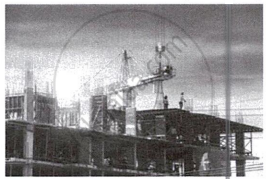
Identify the type of industry given in the picture below and explain its features.
Mr. Sharma, a farmer, grows wheat and sells it to a local flour mill. The flour mill processes the wheat into flour and sells it to a grocery store. The store sells the flour to customers in the neighbourhood.
Identify the different types of industries involved in this case and explain their interdependence.
Mr. Sharma, a farmer, grows wheat and sells it to a local flour mill. The flour mill processes the wheat into flour and sells it to a grocery store. The store sells the flour to customers in the neighbourhood.
How does commerce facilitate the exchange of goods in this scenario?
Mr. Sharma, a farmer, grows wheat and sells it to a local flour mill. The flour mill processes the wheat into flour and sells it to a grocery store. The store sells the flour to customers in the neighbourhood.
Discuss how trade creates utilities in this example.
Project Work
Visit an industrial enterprise located in or near your city to find out whether it is a primary industry or a secondary industry. Classify the enterprise in any one of the four types of industry you have read in the “Introduction to Commercial Organisations” chapter.
C. B. Gupta solutions for कमर्शियल ऐप्लिकेशन [अंग्रेजी] कक्षा ९ आयसीएसई 1 Introduction to Commercial Organisations QUESTION BANK [Pages 21 - 24]
Define the term ‘industry’.
What is extractive industry?
State the objectives of business.
Distinguish between economic and non-economic activity.
Compare business with profession and employment.
Write a note on charitable organisation.
Explain the term ‘Organisation’.
Explain the term ‘Firm’.
Explain the term ‘Company’.
Classify the following into primary, secondary and tertiary sectors:
- Oil drilling
- Oil refinery
- Iron ore mine
- Steel mill
- Airline
- State Bank of India
- Indian Railways
Classify the following into commercial and non-commercial organisations.
- Bharti Airtel
- Apollo Hospital
- World Health Organisation (WHO)
- Delhi Jal Board
- Birla Vidya Mandir, Nainital
- Sun Pharmaceuticals
- Tata Motors
- Bajaj Auto
- Child Rights and You (CRY)
- Red Cross
Read the following and answer the questions that follow.
| A food delivery company uses advanced GPS tracking to ensure timely and accurate deliveries. However, the company faces issues with rising fuel costs and frequent delivery delays caused by traffic congestion. These challenges have increased operational expenses, impacting its profitability. The company is exploring ways to streamline operations, reduce costs, and improve customer satisfaction while maintaining delivery efficiency. |
- Which hindrance in commerce is addressed by the use of GPS tracking in this case?
- Suggest one way the company can minimise the impact of traffic congestion on deliveries.
- Analyse the role of efficient logistics management in maintaining profitability. What additional steps can the company take to balance cost control and service quality?
Classify and explain commercial organisations on the basis of activities performed.
Compare industry, commerce, and trade.
Explain the primary sector in brief.
Explain the secondary sector in brief.
Explain the tertiary sector in brief.
Read the case given below and answer the questions that follow.
| A manufacturing company produces organic food products. To ensure timely delivery, the company uses its own fleet of vehicles and partners with warehousing services. However, due to a lack of advertising, customers are unaware of its products, leading to low sales. |
- Which hindrance in commerce is highlighted in this case?
- Suggest one auxiliary to trade that the company should use to address the issue of low sales.
- Evaluate the importance of auxiliaries to trade, such as transportation, warehousing, and advertising, in ensuring the success of the manufacturing company.
Solutions for 1: Introduction to Commercial Organisations
C. B. Gupta solutions for कमर्शियल ऐप्लिकेशन [अंग्रेजी] कक्षा ९ आयसीएसई chapter 1 - Introduction to Commercial Organisations
Shaalaa.com has the CISCE Mathematics कमर्शियल ऐप्लिकेशन [अंग्रेजी] कक्षा ९ आयसीएसई CISCE solutions in a manner that help students grasp basic concepts better and faster. The detailed, step-by-step solutions will help you understand the concepts better and clarify any confusion. C. B. Gupta solutions for Mathematics कमर्शियल ऐप्लिकेशन [अंग्रेजी] कक्षा ९ आयसीएसई CISCE 1 (Introduction to Commercial Organisations) include all questions with answers and detailed explanations. This will clear students' doubts about questions and improve their application skills while preparing for board exams.
Further, we at Shaalaa.com provide such solutions so students can prepare for written exams. C. B. Gupta textbook solutions can be a core help for self-study and provide excellent self-help guidance for students.
Concepts covered in कमर्शियल ऐप्लिकेशन [अंग्रेजी] कक्षा ९ आयसीएसई chapter 1 Introduction to Commercial Organisations are .
Using C. B. Gupta कमर्शियल ऐप्लिकेशन [अंग्रेजी] कक्षा ९ आयसीएसई solutions Introduction to Commercial Organisations exercise by students is an easy way to prepare for the exams, as they involve solutions arranged chapter-wise and also page-wise. The questions involved in C. B. Gupta Solutions are essential questions that can be asked in the final exam. Maximum CISCE कमर्शियल ऐप्लिकेशन [अंग्रेजी] कक्षा ९ आयसीएसई students prefer C. B. Gupta Textbook Solutions to score more in exams.
Get the free view of Chapter 1, Introduction to Commercial Organisations कमर्शियल ऐप्लिकेशन [अंग्रेजी] कक्षा ९ आयसीएसई additional questions for Mathematics कमर्शियल ऐप्लिकेशन [अंग्रेजी] कक्षा ९ आयसीएसई CISCE, and you can use Shaalaa.com to keep it handy for your exam preparation.
