Please select a subject first
Advertisements
Advertisements
Give reason for the following:
Fertilization cannot take place in flowers if pollination does not occur.
Concept: undefined >> undefined
Is the chromosome number of zygote, embryonal cells and adult of a particular organism always constant? How is the constancy maintained in these three stages?
Concept: undefined >> undefined
Advertisements
Where is the zygote located in the flower after fertilization?
Concept: undefined >> undefined
Draw the diagram of a flower and label the four whorls. Write the names of gamete producing organs in the flower.
Concept: undefined >> undefined
Trace the path a male gamete takes to fertilise a female gamete after being released from the penis.
Concept: undefined >> undefined
State the number of sets of chromosomes present in a zygote.
Concept: undefined >> undefined
Sexual maturation of reproductive tissues and organs are necessary link for reproduction. Elucidate.
Concept: undefined >> undefined
Name the reproductive parts of an angiosperm. Where are these parts located? Explain the structure of its male reproductive part.
Concept: undefined >> undefined
In flowering plants, the pollen grains are transferred to stigma by pollination but the female germ cells are present in the ovary.
Explain with the help of a labelled diagram (only concerned parts), how the male germ cell reaches the ovary.
Concept: undefined >> undefined
Consider the following three flowers namely X, Y and Z. Which flower(s) would develop into a fruit?
| Flower X | Flower Y | Flower Z |
 |
 |
 |
Concept: undefined >> undefined
Explain the post fertilization changes that occur in the ovary of a flower.
Concept: undefined >> undefined
Given below is a diagram of a germinating seed. Label the parts that:
- gives rise to future shoot.
- gives rise to future root system.
- stores food.
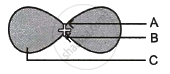
Concept: undefined >> undefined
State the post-fertilisation changes that lead to fruit formation in plants.
Concept: undefined >> undefined
What is the common name of the compound CaOCl2?
Concept: undefined >> undefined
What are the various components of blood? State their functions.
Concept: undefined >> undefined
| The liquid connective tissue A circulates in our body continuously without stopping. This tissue contains a pigment B which imparts it a colour C. The tissue A consists of four components D, E, F and G. The component D fights infection and protects us from diseases. The component E helps in the clotting of tissue A if a person gets a cut. The component F is a liquid which consists mainly of water with many substances dissolved in it and component G carries oxygen from the lungs to all the parts of the body. |
- What is (i) tissue A (ii) pigment B, and (iii) colour C?
- Name (i) D (ii) E (iii) F, and (iv) G.
- Name one substance (other than oxygen) which is transported by tissue A in the human body.
- Which two components of tissue A are the cells without nucleus?
- Name any two organisms ( animals) which do not have liquid like A in their body.
Concept: undefined >> undefined
Which compound of calcium is used for disinfecting drinking water supply?
Concept: undefined >> undefined
Name one compound of calcium which is used for removing the colour of a coloured cloth.
Concept: undefined >> undefined
Name the substance obtained by the action of chlorine on solid (dry) slaked lime.
Concept: undefined >> undefined
Which is the real bleaching agent present in bleaching powder?
Concept: undefined >> undefined
