Advertisements
Advertisements
प्रश्न
Write any five illnesses of the animals in the poem that you find most amusing / laughable.
Advertisements
उत्तर
- Lion centipede catches a cold.
- Centipede catches a has trouble with his feet.
- Arctic fox Suffering from heat.
- The bear's too full of buns.
- Panther's wife chews his ears.
APPEARS IN
संबंधित प्रश्न
A1. True or False
State whether the following statements are true or false:
(1) The author's new house was situated at Bangalore.
(2) The writer was delighted because their new house, was the biggest they ever lived.
One of the advantages of growing up in an Army household was the frequency with which we moved. 'Postings' came with predictable regularity every three years. What was unpredictable and therefore exciting was the suspense. Where would we go this time? Ambala, Pune, Dehradun, Allahabad, Tejpur, Bangalore, Yo! ............ In my short span of thirteen years we had moved lock. stock and barrel eleven times!
Every move meant change. New journeys, new places, new schools, my new books, new uniforms, new friends and new houses. We lived in tents, bashas, Nissen huts, flats and bungalows. No matter what the shape and size of the dwelling, mother soon put her own special stamp on it and transformed it into a familiar place - our home - complete with bright yellow-curtains, coffee-brown carpet, assorted pictures, hanging ferns and potted palms - providing a comforting sense of continuity in our essentially nomadic life.
I was thirteen, the year we moved to the Cantonment at Allahabad. In stark contrast to the razzle-dazzle of the city's commercial areas like Katra and Chowk, the Cantonment was a quiet, orderly place with broad tree-lined roads that still carried the names of long-dead Britishers. Our bungalow was on a sleepy by-lane called MacPherson Road. When we first saw it, my brothers and I were delighted. It was by far the biggest house we had ever lived in. The task of furnishing those huge, echoing rooms daunted Mother.
A2. Complete
a. The broad tree-lined roads were named after.............................
b. Katra and Chowk are .............................
c. Mother was daunted with the task of................................. .
d. The suspense was exciting because the posting was.........................
A3. Personal response
What do you think are the problems faced by those who change households frequently.
Read the following passage and do the activities:
B1 Match:
Match the areas given in Column ‘A’ with the description of Mehendi design given in Column ‘B’:
| 'A' | 'B" | ||
| (i) | North African | (a) | A mix of Indo-Pakistani and Arabic design |
| (ii) | Indian | (b) | Delicate loops and curves, paisleys, teardrops |
| (iii) | Arabic | (c) | Geometrical images |
| (iv) | South Asian | (d) | Local textiles, paintings, and architecture |
Henna comes from the leaves of the plant Lawsonia inertias. The plant grows in hot and dry climes and is native to North Africa, the Indian subcontinent and the Middle East. The leaves of the plant are dried and crushed to powder. Various additives such as coffee decoction, tea, lime juice, Mehendi and eucalyptus oil are mixed with the henna powder to increase the potency of the dry, this also helps to bind the powder to a paste-like consistency. The mixture is applied through cones in intricate patterns depending on the region of use.
Album of Patterns
Four major styles can be found in the vast dictionary of Mehendi designs. Earlier the application was restricted to hand and feet, but the adoption of Mehendi by different cultures throughout the world has seen experimentation on different body parts including the neck naval and back.
North African patterns rely on geometrical images to trace the shape of hands and feet, Arabic designs borrow heavily from local textiles, paintings, and architecture. These are more spaced out, to allow the design to stand out boldly from the skin parts left untouched by henna. The Indian style comprises of delicate loops and curves, paisleys, teardrops and flowers that give a dainty filigreed glow-like effect. Though intricate patterning is the name of the game today, this trend took off in India only during the 20th century. The patterns preferred by the South Asian countries are mixed with Indo-Pakistani and Arabic design schemes. Chinese and Celtic symbols now find a place in the vast repertoire of Mehendi designs as well.
B2 Complete:
Complete the following and write:
(i) The procedure before applying henna _______
(ii) The reasons for using additives _______
(iii) The suitable climatic conditions for the henna plant _______
(iv) Mehendi is used on _______
B3 Find words:
Look at the following description and find out proper words from the passage and write:
(i) Existing naturally in the place : - n _______
(ii) Consist of something: - c _______
(iii) Delicate decoration made from gold, silver and copper wire: - f _______
(iv) Substance that is added in small quantity : - a _______
B4 Language study:
Fill in the blanks with suitable subordinators given in the box:
| as well as, so that, however, which |
(i) The mixture is applied through cones in intricate patterns _______ depend on the region of use.
(ii) The intricate pattern is the name of the game of today _______, this trend took off in India, recently.
(iii) North African pattern relies on geometrical images ______ they can trace the shape of hands and feet.
(iv) The patterns preferred by the South Asian countries are mixed with Indo-Pakistani _______ Arabic design schemes.
B5 Personal Response:
Which Mehendi design do you like? Why?
The lecture was delivered in 1864. What are the shifts in style and diction that make the language different from the way it is used today?
Identify the lines that reveal the critical tone of the poet towards the felling of the tree.
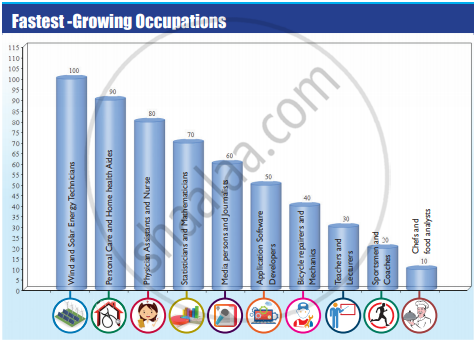
Pick out words that refer to ‘means of living’ and fill them in the Web.
(profession/recreation/occupation/job/ pastime/employment/hobby/career/entertainment/mission/trade/buisness/sports/retirement/placement)

A small thought, put in action, led to a great achievement. Pick out the lines from the beginning and end of the poem and explain their significance.
Answer the given question in your own words.
Why was the Prince sad?
Correct the following statement.
The last leaf was a real leaf that survived.
Discuss in groups and share with one another.
Do you spend time admiring and thinking over the beauties of nature? Elaborate on your response.
With the help of the internet and other sources, obtain more information about the critically endangered birds and animals in India. Find the names of their sanctuaries.
Find out the different processes by which fabrics are made. Find illustrations and write a few lines on each process.
Write short note on the following:
The 1883 eruption
Show the three categories of volcanoes using the following tree diagram structure.
Who erected the first known veterinary hospitals in the world?
Relate the themes of the Fair to your science textbook by writing the relevant chapter numbers under each theme.
List and say whether the following statement agrees with the passage or not.
When you want to make a speech, there’s no need to think about it in advance.
Hamid’s friends are ______
Look at the number pattern. Fill the blank in the middle of the series or end of the series.
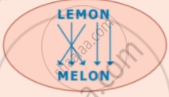
ELFA, GLHA, ILJA, ______, MLNA
Why does the writer think that the peepul tree is a great show off?
Geetha madam couldn’t stop the children running out of the train because they ______.
Nilavan unknowingly started the space shuttle.
| Mr. Murugan is a farmer. He has a small piece of land and two bulls. He takes good care of his bulls as they help him in farming. Every morning, he takes the bulls for grazing. When it rains he ploughs the land with the bulls. As he has no one to help he starts sowing the seed before sunrise. He irrigates the crop till it grows. He reaps and binds the crop then takes it to thrash the paddy. Finally, with the help of the bulls, he takes the paddy to his house. |
Name the actions of Murugan.
![]() |
|
![]() |
|
![]() |
Choose the odd one out.
Match their hobbies.
![]() |
swimming |
![]() |
cycling |
![]() |
gardening |
How will you treat your guest?
Meena’s father was a fisher man.
Where do the crocodiles save?
Jana saw a _______ behind her.
Choose the word with same meaning.
Kingdom- ______
Which part of the plant should be watered?