Advertisements
Advertisements
प्रश्न
Choose the correct option and rewrite the statement.
The number of electrons in the outermost shell of alkali metals is _______.
विकल्प
1
2
3
7
Advertisements
उत्तर
The number of electrons in the outermost shell of alkali metals is 1.
APPEARS IN
संबंधित प्रश्न
The element which forms a basis oxide has the atomic number of:
(a) 18
(b) 17
(c) 14
(d) 19
(a) How is possible valency of an element determined from the electronic configuration of its atom ?
(b) Determine the valency of an element X whose atomic number is 15.
What is the need for classification of elements?
Among the given species A–, A+, and A, the smallest one in size is ______.
What is the atomic number of elements of period 3 and group 17 of the Periodic Table?
The elements A, B, and C belong to groups 1, 14, and 17 respectively of the Periodic Table. Which two elements will form ionic compounds?
An element X from group 2 of the Periodic Table reacts with Y from group 17 to form a compound. Give the formula of the compound.
Which one of the following statements is not correct about the trends in the properties of the elements of a group on going down in a group?
Which of the following hydroxides is most basic?
The elements of group 16 are called ______
Element ‘A’ has electronic configuration 2, 7; ‘B’ has electronic configuration 2, 8, 5 and ‘C’ has electronic configuration 2, 8, 7. Which two elements will exhibit similar chemical properties?
Arrange the following elements in the order of their decreasing metallic character
Na, Si, Cl, Mg, Al
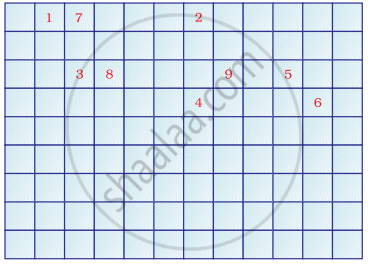
Complete the following cross word puzzle
Across:
(1) An element with atomic number 12.
(3) Metal used in making cans and member of Group 14.
(4) A lustrous non-metal which has 7 electrons in its outermost shell.
Down:
(2) Highly reactive and soft metal which imparts yellow colour when subjected to flame and is kept in kerosene.
(5) The first element of second Period
(6) An element which is used in making fluorescent bulbs and is second member of Group 18 in the Modern Periodic Table
(7) A radioactive element which is the last member of halogen family.
(8) Metal which is an important constituent of steel and forms rust when exposed to moist air.
(9) The first metalloid in Modern Periodic Table whose fibres are used in making bullet-proof vests
Relate the names of the following scientists with the statements given below.
Arranged elements in the increasing order of atomic mass.
Complete the following triads by inserting the missing elements.
Li, ______, K
How are elements grouped into various families in the periodic table?
The atomic number of an element 'X' is 11.
- Write the electronic configuration of X and find its valency.
- Write the formula and nature of its oxide.
