Advertisements
Advertisements
प्रश्न
The figures (A) and (B) given below are showing some kind of adjustment. Study the figures and answer the questions that follow.
| A | 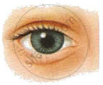 |
 |
B |
- Identify the kinds of adjustments done in the figures (A) and (B).
- Distinguish between the adjustments of figures (A) and (B) on the basis of:
- The size of pupil.
- The pigment which gets regenerated.
- Cells of the retina.
Advertisements
उत्तर
- The kind of adjustments done in Figure (A) is dilated pupil due to dim light.
The kind of adjustments done in Figure (B) is constricted pupil due to bright light. -
- In the case of A, the pupil dilates to allow more light into the eyes.
In case B, the pupil constricts, reducing the amount of light entering the eyes. - Case A involves the regeneration of visual purple or rhodopsin.
Case B involves the regeneration of cone cells or iodopsin. - Rod cells become activated and begin producing rhodopsin.
Cone cells become activated and begin producing iodopsin.
- In the case of A, the pupil dilates to allow more light into the eyes.
APPEARS IN
संबंधित प्रश्न
The least distance of distinct vision for a young adult with normal vision is about ______.
The change in focal length of an eye lens is caused by the action of the ______.
The 'eye muscles' are controlled by which cranial nerves?
The least distance of distinct vision for a normal eye is ____________.
When light rays enter the eye, most of the refraction occurs at the
How are we able to see nearby and also the distant objects clearly?
A piece of red glass is heated till its glows in dark. The colour of flowing glass would be:-
In the blind spot of the human eye ______.
Define the following term:
Adaptation
Differentiate between members of the following pair with reference to what is asked in the bracket.
Near and distant accomodation (shape of lens).
