Advertisements
Advertisements
प्रश्न
The figures (A) and (B) given below are showing some kind of adjustment. Study the figures and answer the questions that follow.
| A | 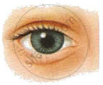 |
 |
B |
- Identify the kinds of adjustments done in the figures (A) and (B).
- Distinguish between the adjustments of figures (A) and (B) on the basis of:
- The size of pupil.
- The pigment which gets regenerated.
- Cells of the retina.
Advertisements
उत्तर
- The kind of adjustments done in Figure (A) is dilated pupil due to dim light.
The kind of adjustments done in Figure (B) is constricted pupil due to bright light. -
- In the case of A, the pupil dilates to allow more light into the eyes.
In case B, the pupil constricts, reducing the amount of light entering the eyes. - Case A involves the regeneration of visual purple or rhodopsin.
Case B involves the regeneration of cone cells or iodopsin. - Rod cells become activated and begin producing rhodopsin.
Cone cells become activated and begin producing iodopsin.
- In the case of A, the pupil dilates to allow more light into the eyes.
APPEARS IN
संबंधित प्रश्न
What happens to the image distance in the eye when we increase the distance of an object from the eye?
Write an Explanation.
Persistence of vision
Identify and explain concepts given in this diagram.
The 'eye muscles' are controlled by which cranial nerves?
Having two eyes facilitates in
A: Increasing the field of view
B: Bringing three-dimensional view
C: Developing the concept of distance/size
Then the correct option is/are
When light rays enter the eye, most of the refraction occurs at the
In the blind spot of the human eye ______.
Adjusting the focal length of the eye lens to view objects at different distances is done by ______.
Give the reason for the following:
A person from bright sunlight outside enters a poorly lit room and feels blinded for a short while.
Differentiate between members of the following pair with reference to what is asked in the bracket.
Near and distant accomodation (shape of lens).
