Advertisements
Advertisements
प्रश्न
Study the following phrases and their meanings. Use them appropriately to complete the sentences that follow.
We have no right to …………. people who do small jobs.
विकल्प
look after: take care of
look down on: disapprove or regard as inferior
look in (on someone): make a short visit
look into: investigate
look out: be careful
look up: improve
look up to: admire
Advertisements
उत्तर
We have no right to look down on people who do small jobs.
संबंधित प्रश्न
Answer the question in two or three paragraphs (100–150 words).
How does Evelyn hear music?
Answer the following question in one or two sentences.
Who were the people in Kezia’s family?
Thinking about the Poem
What are the things the wind does in the first stanza?
How does Iswaran describe the uprooted tree on the highway? What effect does he want to create in his listeners?
Look at the following sentences. They each have two clauses, or two parts each with their own subject and verb or verb phrase. Often, one part (italicised) tells us when or why something happened.
• I reached the market when most of the shops had closed. (Tells us when I reached.)
• When Rahul Dravid walked back towards the pavilion, everyone stood up. (Tells us when everyone stood up.)
• The telephone rang and Ganga picked it up. (Tells us what happened next.)
• Gunjan has been with us ever since the school began. (Tells us for how long he has been with us.)
I. Identify the two parts in the sentences below by underlining the part that gives us the information in brackets.
1. Where other girls wore traditional Indian dresses, Santosh preferred shorts.
(Contrasts her dress with that of others)
2. She left home and got herself enrolled in a school in Delhi. (Tells us what happened after the first action.)
3. She decided to fight the system when the right moment arrived. (Tells us when she was going to fight the system.)
4. Little Maria had not yet celebrated her tenth birthday when she was packed off to train in the United States. (Tells us when Maria was sent to the U.S.)
Based on your reading of the story, answer the following question by choosing the correct options.
Private Quelch was nick-named ‘Professor’ because of ____
In groups of six, work on one of the mysteries given below by surfing the net and through other sources. Create a power point presentation/a photo essay.
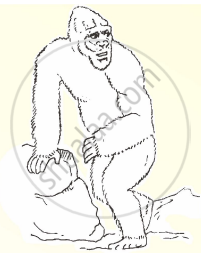
- Yeti, the abominable snowman
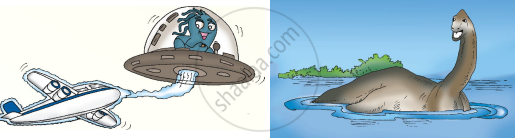
- Loch Ness Monster
- UFOs (Unidentified Flying Objects)
- Lost city of Atlantis
- Crop circles
- Nazca lines
What does he plant who plants a tree? a
He plants a friend of sun and sky;b
He plants the flag of breezes free;
The shaft of beauty, towering high;
He plants a home to heaven anigh;
For song and mother-croon of bird
In hushed and happy twilight heard____
The treble of heaven's harmony_____
These things he plants who plants a tree.
Read the lines given above and answer the question that follow:
I wandered lonely as a Cloud
That floats on high o'er vales and Hills,
When all at once I saw a crowd,
A host, of golden Daffodils;
Beside the Lake, beneath the trees,
Fluttering and dancing in the breeze.
Read the lines given above and answer the question that follow.
Who does he come across while wandering ?
“I love the West,” said the girl irrelevantly. Her eyes were shining softly. She looked away out the car window. She began to speak truly and simply without the gloss of style and manner: “Mamma and I spent the summer in Deliver. She went home a week ago
because father was slightly ill. I could live and be happy in the West. I think the air here agrees with me. Money isn’t everything. But people always misunderstand things and remain stupid—” “Say, Mr. Marshal,” growled the glum-faced man. “This isn’t quite fair. I’m needing a drink, and haven’t had a smoke all day. Haven’t you talked long enough? Take me in the smoker now, won’t you? I’m half dead for a pipe.”
The bound travellers rose to their feet, Easton with the Same slow smile on his face. “I can’t deny a petition for tobacco,” he said, lightly. “It’s the one friend of the unfortunate. Good-bye, Miss Fairchild. Duty calls, you know.” He held out his hand for a farewell. “It’s too bad you are not going East,” she said, reclothing herself with manner and style. “But you must go on to Leavenworth, I suppose?” “Yes,” said Easton, “I must go on to Leavenworth.”
The two men sidled down the aisle into the smoker. The two passengers in a seat near by had heard most of the conversation. Said one of them: “That marshal’s a good sort of chap. Some of these Western fellows are all right.” “Pretty young to hold an office like that, isn’t he?” asked the other. “Young!” exclaimed the first speaker, “why—Oh! didn’t you catch on? Say—did you ever know an officer to handcuff a prisoner to his right hand?”
Read the extract given below and answer the question that follow.
Why is it ironic when Fairchild says, “people always misunderstand things and remain stupid —”?
Why did he ask for the king’s forgiveness?
We should not mess up with things that belong to others. Elaborate.
In what way is Pambupatti different from any other village?
Make noun from the word given below by adding –ness, ity, ty or y
kind ___________.
Multiple Choice Question:
According to the poet, a house is ________
Multiple Choice Question:
Which one of the following is not associated with the real beauty?
Multiple Choice Question:
The child in this poem seems to be ____________.
What does a little child think of his/her teacher? What does the child decide to explore?
How did the spirit of the dog help the farmer first?
How did it help him next?
Read the extract given below and answer the questions that follow:
| Portia: Away then! I am lock'd in one of them: If you do love me, you will find me out. Nerissa and the rest, stand all aloof. Let music sound while he doth make his choice; Then, if he lose, he makes a swan-like end, Fading in music: |
- Where does the scene take place?
What does Portia mean when she says, If you do love me, you will find me out? [3] - What TWO words would you use to describe Portia's feelings at this point? Give a reason for your answer. [3]
- Explain Portia’s reference to ‘swan-like end'. [3]
- Later in the scene, Portia gives Bassanio gift.
What does she give him? What does this gift symbolise? [3] - What is the theme of the song sung in the background when Bassanio makes his choice?
How is the theme reflected in the choice he makes?
What does Bassanio find in the casket that he chooses? [4]
