Advertisements
Advertisements
प्रश्न
Name the physical quantity obtained by dividing ‘Distance travelled’ by ‘Time taken’ to travel that distance.
Advertisements
उत्तर
Speed is obtained by dividing 'distance travelled' by 'time taken' to travel that distance.
APPEARS IN
संबंधित प्रश्न
What does the path of an object look like when it is in uniform motion?
What do the following measure in a car ?
(a) Speedometer (b) Odometer
What is the SI unit of retardation ?
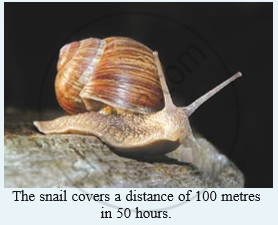
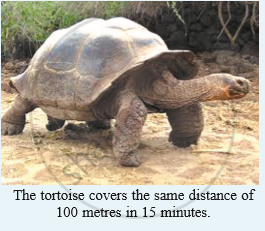
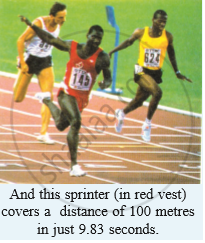
A snail covers a distance of 100 metres in 50 hours. Calculate the average speed of snail in km/h.
If a bus travelling at 20 m/s is subjected to a steady deceleration of 5 m/s2, how long will it take to come to rest ?
Give one example of following motion :
Variable velocity
A car moving on a straight path covers a distance of 1 km due east in 100 s. What is velocity of the car?
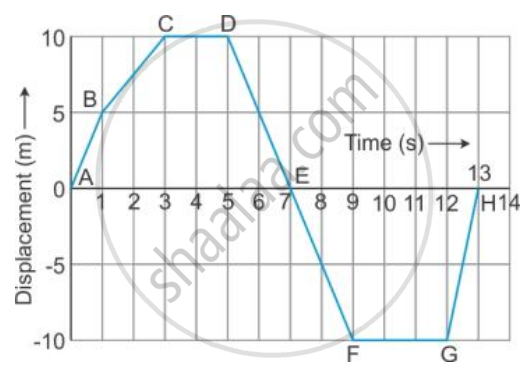
From the displacement-time graph of a cyclist given below in the Figure, find The average velocity in the first 4 s.
What is the relation between distance and time when the body is moving with uniform velocity?
Give two examples of uniform circular motion from your daily life.
