Advertisements
Advertisements
प्रश्न
Make a collection of Rangoli motifs and patterns.
Write about each motif or pattern in your own words -
it could just be a label or a description or some information or comment.
Advertisements
उत्तर
- Floral Motif: Lotus, marigold, and roses are common Rangoli patterns that represent beauty, prosperity, and positivity. Floral motifs are frequently made with vivid colors and are ideal for celebrations such as Diwali or Pongal.
- Geometric Patterns: Circles, triangles, and squares are examples of symmetrical designs that are carefully made and often symbolize harmony and order. Geometric Rangolis are well-liked by beginners and are frequently constructed with dots to maintain symmetry.
- Swastik or Om: A holy design with the Om or Swastik symbol, which stands for luck and spirituality. Usually seen during religious rites and pujas, these designs represent the benefits of the divine.
- Kolam Designs: These patterns are deeply rooted in Tamil culture and represent harmony and welcome. Traditional South Indian Rangoli with intricate, connected lines, frequently created with rice flour.
- Festival-Specific Rangolis: Depending on the festival, designs may include symbols such as sugarcane, kalash (holy pots), or diyas (lamps). To add festive charm, these designs change according on the season, such as using sugarcane for Pongal or diyas for Diwali.
(Students can write about more rangoli motifs and pattern.)
संबंधित प्रश्न
Mention the three phases of the author’s relationship with his grandmother before he left the country to study abroad.
Honey-bees live an organized life like human beings. Discuss what work the following honey-bees do, as per the poem. Write it down in your own words, in your notebook.
- King/Emperor bee
- Magistrate bees
- Merchant bees
- Soldier bees
- Mason bees
- Civilian bees
- Porter bees
- Judge bee
Answer the following question in short.
What did the bundle in silken cloth contain?
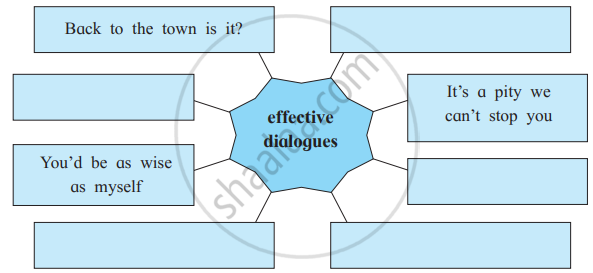
There are some dialogues that are short, but quite effective. They give us enjoyment and add beauty to the main story. Find some more from the text.
Shakespeare’s poetry has come to be valued for its own sake on the stage. Comment with reference to the play ‘A Midsummer Night’s Dream.’
How was Gonzalo helpful to Prospero when he left Milan?
When are we in a state of trance?
Identify the speaker/character.
He felt something moving along his body almost up to his chin.
What does the man have?
When does the world become green?
