Advertisements
Advertisements
प्रश्न
In the point (4, 7), 4 denotes the ______.
Advertisements
उत्तर
In the point (4, 7), 4 denotes the x-coordinate (abscissa).
Explanation:
First number (coordinate) of the ordered pair is called as the x-coordinate or abscissa.
Hence, in the point (4, 7), 4 denotes the x-coordinate.
APPEARS IN
संबंधित प्रश्न
Plot the following points on a graph sheet. Verify if they lie on a line
K(2, 3), L(5, 3), M(5, 5), N(2, 5)
The following table shows the amount of rice grown by a farmer in different years:
| Years: | 2000 | 2001 | 2002 | 2003 | 2004 | 2005 | 2006 |
| Rice grown (in quintals): | 200 | 180 | 240 | 260 | 250 | 200 | 270 |
Plot a graph to illustrate this information.
The point (3, 4) is at a distance of ______.
A point which lies on both the axis is ______.
The distance of any point from the y-axis is the ______ coordinate.
All points with y-coordinate as zero lie on the ______.
The point where the two axes intersect is called the ______.
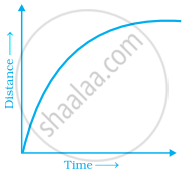
Explain the situations represented by the following distance-time graph.
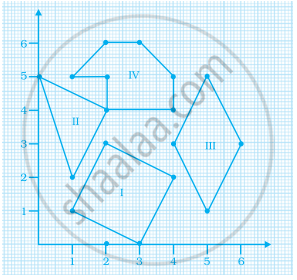
Find the coordinates of the vertices of the given figures.
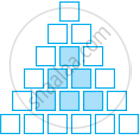
Sonal and Anmol then made another sequence of the designs. Three of the designs are shown below.
 |
 |
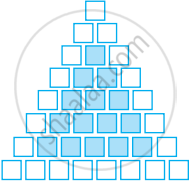 |
(a) Complete the table.
| Rows, r | 4 | 6 | 8 |
| Number of white Tiles, w | 9 | ||
| Number of Purple Tiles, p | 1 |
(b) Draw a graph of rows and number of white tiles. Draw another graph of the number of rows and the number of purple tiles. Put the number of rows on the horizontal axis.
(c) Which graph is linear?
