Advertisements
Advertisements
प्रश्न
Having observed the squirrels around us, can we say that a squirrel is a fast paced animal?
Advertisements
उत्तर
Yes, based on our observation of the squirrels around us, we can say that a squirrel is a fast paced animal. We rarely come across squirrels sitting still, except when they are biting into the nuts. Usually we see the squirrels running from one place to another with great energy.
संबंधित प्रश्न
Read the following sentences carefully to understand the meaning of the italicised
phrases. Then match the phrasal verbs in Column A with their meanings in Column B.
1. A communal war broke out when the princess was abducted by the neighbouring prince.
2. The cockpit broke off from the plane during the plane crash.
3. The car broke down on the way and we were left stranded in the jungle.
4. The dacoit broke away from the police as they took him to court.
5. The brothers broke up after the death of the father.
6. The thief broke into our house when we were away.
| A | B |
| (i) break out | (a) to come apart due to force |
| (ii) break off | (b) end a relationship |
| (iii) break down | (c) break and enter illegally; unlawful trespassing |
| (iv) break away (from someone) | (d) of start suddenly, (usually a fight, a war or a disease) |
| (v) break up | (e) to escape from someone’s grip |
| (vi) break into | (f) stop working |
Why does the author say that Iswaran seemed to more than make up for the absence of a TV in Mahendra’s living quarters?
Now rewrite the pair of sentences given below as one sentence.
Grandfather told me about the old days. All books were printed on paper then.
In groups of six, work on one of the mysteries given below by surfing the net and through other sources. Create a power point presentation/a photo essay.
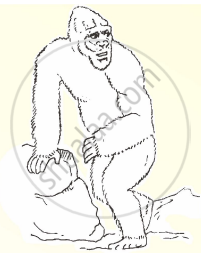
- Yeti, the abominable snowman
- Loch Ness Monster
- UFOs (Unidentified Flying Objects)
- Lost city of Atlantis
- Crop circles
- Nazca lines

Some are like fields of sunlit corn,
Meet for a bride on her bridal morn,
Some, like the flame of her marriage fire,
Or, rich with the hue of her heart's desire,
Tinkling,luminous,tender, and clear,
Like her bridal laughter and bridal tear.
Read the lines given above and answer the question that follow.
Besides visual imagery the poet also uses auditory imagery.Pick out the lines.
Abou Ben Adhem (may his tribe increase!)
Awoke one night from a deep dream of peace,
And saw, within the moonlight in his room,
Making it rich, and like a lily in bloom,
An angel writing in a book of gold:-
Read the lines given above and answer the following question.
Explain with reference to context.
Mr. Oliver, an Anglo-Indian teacher, was returning to his school late one night on the outskirts of the hill station of Shimla. The school was conducted on English public school lines and the boys – most of them from well-to-do Indian families – wore blazers, caps and ties. “Life” magazine, in a feature on India, had once called this school the Eton of the East.
Mr. Oliver had been teaching in this school for several years. He’s no longer there. The Shimla Bazaar, with its cinemas and restaurants, was about two miles from the school; and Mr. Oliver, a bachelor, usually strolled into the town in the evening returning after dark, when he would take short cut through a pine forest.
Read the extract given below and answer the question that follow.
Who was Mr Oliver? Where was he working?
Its a cruel thing to leave her so.”
“Then take her to the poorhouse: she’ll have to go there,” answered the blacksmith’s wife, springing away, and leaving Joe behind.
For a little while the man stood with a puzzled air; then he turned back, and went into the hovel again. Maggie with painful effort, had raised herself to an upright position and was sitting on the bed, straining her eyes upon the door out of which all had just departed, A vague terror had come into her thin white face.
“O, Mr. Thompson!” she cried out, catching her suspended breath, “don’t leave me here all alone!” ,
Though rough in exterior, Joe Thompson, the wheelwright, had a heart, and it was very tender in some places. He liked children, and was pleased to have them come to his shop, where sleds and wagons were made or mended for the village lads without a draft on their hoarded sixpences.
“No, dear,” he answered, in a kind voice, going to the bed, and stooping down over the child, “You she’n’t be left here alone.” Then he wrapped her with the gentleness almost of a woman, in the clean bedclothes which some neighbor had brought; and, lifting her in his strong arms, bore her out into the air and across the field that lay between the hovel and his home.
Read the extract given below and answer the question that follow.
Who said, ‘It’s a cruel thing to leave her so.’ Why did he say this?
Answer the following question.
Where did the lady find the bear cub? How did she bring it up?
Answer the following questions:
(i) What did Toto do to entertain Timothy?
(ii) What did he do when Timothy lost his temper?
“A sharp V-shaped line had formed between her eyebrows.” What does it suggest to you about Rukku Manni’s mood?
What was unique about the Great Glass Elevator?
Describe the process of invention of Vita-Wonk.
Where and by which community cricket was initially played in India?
Why did Swami Haridas say Tansen was ‘talented’?
How did father make an attempt to save the Cat for the Second time?
How does the kite look like in the sky?
Add im- or in- to each of the following words and use them in place of the italicised words in the sentences given below.
| patient, proper, possible, sensitive, competent |
That’s not a proper remark to make under the circumstances.
How does the poem, Crossing the Bar, portray the poet's deep affirmation and faith in God?
Why did the Gujar women strike the big brass gurrahs with stick?
