Advertisements
Advertisements
प्रश्न
Given below are some idiomatic expressions with their meanings. Understand the meaning.
Advertisements
उत्तर
| a) | wait for the dust to settle | to wait for a situation to become clear or certain |
| b) | get/have all your ducks in a row | to have made all the preparations needed to do something / to be well organized |
| c) | fetch and carry (for somebody) | to do a lot of little jobs for somebody as if you were their servant |
| d) | do the math | to think carefully about something before doing it, so that you know all the relevant facts or figures |
| e) | round the corner | very near |
APPEARS IN
संबंधित प्रश्न
Change the following sentence into indirect speech.
First soldier: The white soldier gets huge pay, mansions, and servants.
Second soldier: We get a pittance and slow promotions.
Third soldier: Who are the British to abolish our customs?
The first man said that___________________________________
The second soldier remarked that _______________________
The third soldier asked__________________________________
When we compare two nouns, we use comparative adjectives. When we compare more than two nouns, we use superlative adjectives.
For Example -
a. Milind is taller than John.
b. Zakir is the tallest of the three brothers.
Look at the following sentence and observe the changes in the sentence. Discuss the changes and note your responses:
Atul is not as bright as Milind in studies.
Go through the statement taken from the text – ‘The social democracy means a way of life which recognises liberty, equality, and fraternity’.
The underlined part of the statement provides us some facts/information about social democracy. The remaining part of the sentence which is not underlined can be converted into a wh-question.
What does social democracy mean?
Now go through the underlined part of the statement/sentence given below and change them into question by using the appropriate Wh-form.
The politically minded Indians preferred the expression ‘the Indian nation’.
Try to find out synonyms (words that mean the same) for the following:
(You may use a dictionary / theasures)
- disapproved: ______
- bits/pieces: ______
- achievement: ______
- attracted: ______
- nuisance: ______
- mishap: ______
- controlled: ______
- rebuke: ______
Use the following phrase in your own sentence -
get a hold of
He _________ (attend) the conference.
Fill in the blank by adding the appropriate prefix/suffix to the word given in bracket.
The ___________ of the President has been expected for the last half an hour. (arrive)
Complete the sentence given below choosing the right connector given in the option.
It is raining. Take an umbrella _________ you will get drenched.
Supply suitable linker.
Many writers make incorrect sentences __________ they try to put sentences together. They may make grammatical errors __________ leave out important punctuation marks. Making such mistakes is quite common __________ preparing the first draft . __________ he must carefully edit his final draft.
Identify the phrase in the following sentence and classify them as Adjective, Adverb, or Noun phrase.
The train halts at every junction.
Identify the non-finite in the following sentence and underline them.
Travelling with her family, Tara enjoyed every minute of it.
Find the antonym for the following word.
Disgrace ×
“I may lend you some money.” Balu promised ______some money.
Put the words in correct order and rewrite sentence.
Find me brushes. (New, Five, Yellow)
Write the plural form.
| mango |  |
_______. |
Help the space ship reach the correct planet.
 |
______ |
 |
______ ______ |
|
______ |


Choose the correct word.
We bought _______ pens.

Fill in the blank.

B is______ C.
Write down clipped word for the given picture.
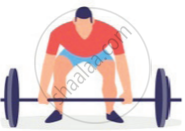
____________
(gymnasium)
Change the sentence into past perfect tense and future perfect tense.
They have cooked their meal.
Mark (✓) if it is past perfect tense and (x) future perfect tense.
The boy will have grown up like a man in few years.
Fill in the blank with suitable homophone:
I like to have toasted ______ for breakfast.
Fill in the blank using past perfect tense form of the verb:
My father ______(be) to Mumbai once before.
Fill in the blank using past perfect tense form of the verb:
If we ______(call) the manager ahead, we would not have needed to wait so long for a table.
Read what these people say and rewrite as sentence.
We will go shopping tomorrow.
Joseph and Mary ______
Find out the synonym of the underlined word in each of the following sentence.
...under the spout to catch the stray leaves.
Pick out the finite verb in the following sentence:
Despite being a celebrity, Ravi mingles easily with everyone.
Read the following sentence and fill in the blank.
If I were you, I ______(accept) this offer.
The judge turned ______ the defendant's appeal for a postponement.
Find the meaning of the following word from a good dictionary.
sawmill
