Advertisements
Advertisements
प्रश्न
Give any two examples of agents of pollination.
Advertisements
उत्तर
Examples of agents of pollination are:
- Insect pollination: Bees are the most common and recognized insect pollinators.
- Bird pollination: Plants are pollinated by some birds, particularly hummingbirds.
APPEARS IN
संबंधित प्रश्न
How does fertilisation occur in flowers? Name the parts of the flower that develop into (i) seed, and (ii) fruit after fertilisation.

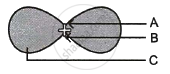
(i) Name the part marked 'A' in the diagram.
(ii) How dose 'A' reachese part 'B'?
(iii) State the importance of the part 'C'.
(iv) What happens to the part marked 'D' after fertilisation is over?
Explain what you understand by sexual reproduction.
How does the process of fertilisation take place in flowers?
Name the swollen lower part of the carpel.
What is made in anther of a flower?
What is seed?
The part of a seed which grows and develops into root on germination is :
(a) cotyledon
(b) plumule
(c) follicle
(d) radicle
In a bisexual flower, inspite of the young stamens being removed artificially, the flower produces fruit. Explain.
In what ways is fertilisation in a plant similar to fertilisation in a human?
In what ways is fertilisation in a plant different from fertilisation in a human?
What part is played by stamens and carpels in reproduction?
Give one example each of unisexual and bisexual flowers. Differentiate between the two types of pollination that occur in flowers. What happens when a pollen lands on a suitable stigma? Write about the events that occur till the seed formation in the ovary.
Draw a diagram of a pistil showing pollen tube growth into the ovule and label the following:
Pollen grain, male gamete, female gamete, ovary.
What is phototropism?
List any two differences between pollination and fertilization.
Sketch the labelled diagram.
Flower with its sexual reproductive organs.
Mention pollination types.
Draw a diagram of the longitudinal section of a flower and label the following parts.
Differentiate between self-pollination and cross-pollination.
Find an odd one out.
Accessory whorls : Calyx and corolla : : essential whorls : ______________
Give scientific reason.
Flower is a structural unit of sexual reproduction in plants.
Draw a neat and labelled diagram.
Double fertilization in angiosperms
Match the following
| 1. | Petal | Opuntia |
| 2. | Fern | Chrysanthemum |
| 3. | Phylloclade | Attracts insect |
| 4. | Hooks | Spore |
| 5. | Sucker | Bignonia |
The essential parts of a flower are ______.
Write the events involved in the sexual reproduction of a flowering plant.
a. Discuss the first event and write the types.
b. Mention the advantages and the disadvantages of that event.
Which type of development is observed in male gametophytes of plants?
The 3-celled egg apparatus at the micropylar end comprises of ______
The flower of the Hibiscus plant is ______
The process of release of eggs from the ovary is called ______
Variations occur as a result of ______
Complete the table
| Carly x | ______ | ______ |
| ______ | petal | attract insects |
| Androecium | ______ | Male reproductive part |
| ______ | ______ | Female reproductive part. |
The ovaries of different flowers may contain ______.
Double fertilization means ______.
Triple fusion involves ______.
Consider the following three flowers namely X, Y and Z. Which flower(s) would develop into a fruit?
| Flower X | Flower Y | Flower Z |
 |
 |
 |
Given below is a diagram of a germinating seed. Label the parts that:
- gives rise to future shoot.
- gives rise to future root system.
- stores food.