Advertisements
Advertisements
प्रश्न
Find gof and fog, if f(x) = 8x3 and `g(x) = x^(1/3)`.
Advertisements
उत्तर
f(x) = 8x3 and `g(x) = x^(1/3)`
∴ (gof)(x) = g(f(x))
= g(8x3)
= `(8x^3)^(1/3)`
= 2x
(fog)(x) = f(g(x))
= `f(x^(1/3))`
= `8(x^(1/3))^3`
= 8x
संबंधित प्रश्न
Let f : W → W be defined as
`f(n)={(n-1, " if n is odd"),(n+1, "if n is even") :}`
Show that f is invertible a nd find the inverse of f. Here, W is the set of all whole
numbers.
Let f, g and h be functions from R to R. Show that
(f + g)oh = foh + goh
(f · g)oh = (foh)·(goh)
State with reason whether following functions have inverse
f: {1, 2, 3, 4} → {10} with f = {(1, 10), (2, 10), (3, 10), (4, 10)}
State with reason whether following functions have inverse
g: {5, 6, 7, 8} → {1, 2, 3, 4} with g = {(5, 4), (6, 3), (7, 4), (8, 2)}
Show that f: [–1, 1] → R, given by f(x) = `x/(x + 2)` is one-one. Find the inverse of the function f: [–1, 1] → Range f.
(Hint: For y in Range f, y = `f(x) = x/(x + 2)` for some x in [–1, 1] i.e., `x = (2y)/(1 - y)`)
Consider f: R → R given by f(x) = 4x + 3. Show that f is invertible. Find the inverse of f.
If f: R → R be given by `f(x) = (3 - x^3)^(1/3)`, then fof(x) is ______.
Let f: W → W be defined as f(n) = n − 1, if is odd and f(n) = n + 1, if n is even. Show that f is invertible. Find the inverse of f. Here, W is the set of all whole numbers.
Let f : W → W be defined as f(x) = x − 1 if x is odd and f(x) = x + 1 if x is even. Show that f is invertible. Find the inverse of f, where W is the set of all whole numbers.
Is g = {(1, 1), (2, 3), (3, 5), (4, 7)} a function? If g is described by g (x) = αx + β, then what value should be assigned to α and β
Let f: R → R be defined by f(x) = 3x 2 – 5 and g: R → R by g(x) = `x/(x^2 + 1)` Then gof is ______.
Let f = {(1, 2), (3, 5), (4, 1) and g = {(2, 3), (5, 1), (1, 3)}. Then g o f = ______ and f o g = ______.
The composition of functions is associative.
If f(x) = (ax2 + b)3, then the function g such that f(g(x)) = g(f(x)) is given by ____________.
If f(x) = `(3"x" + 2)/(5"x" - 3)` then (fof)(x) is ____________.
If f(x) = (ax2 – b)3, then the function g such that f{g(x)} = g{f(x)} is given by ____________.
Which one of the following functions is not invertible?
The inverse of the function `"y" = (10^"x" - 10^-"x")/(10^"x" + 10^-"x")` is ____________.
A general election of Lok Sabha is a gigantic exercise. About 911 million people were eligible to vote and voter turnout was about 67%, the highest ever
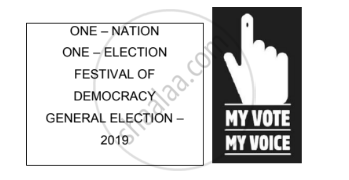
Let I be the set of all citizens of India who were eligible to exercise their voting right in the general election held in 2019. A relation ‘R’ is defined on I as follows:
R = {(V1, V2) ∶ V1, V2 ∈ I and both use their voting right in the general election - 2019}
- Two neighbors X and Y ∈ I. X exercised his voting right while Y did not cast her vote in a general election - 2019. Which of the following is true?
`f : x -> sqrt((3x^2 - 1)` and `g : x -> sin (x)` then `gof : x ->`?
Let A = `{3/5}` and B = `{7/5}` Let f: A → B: f(x) = `(7x + 4)/(5x - 3)` and g:B → A: g(y) = `(3y + 4)/(5y - 7)` then (gof) is equal to
Let 'D' be the domain of the real value function on Ir defined by f(x) = `sqrt(25 - x^2)` the D is :-
If f: A → B and G B → C are one – one, then g of A → C is
A function \(f:X\to Y\) is defined to be invertible if there exists a function \(g:Y\to X\) such that which conditions hold?
What is the function \(g\) called when \(g\circ f=I_X\) and \(f\circ g=I_Y\)?
Which statement correctly describes a one-one (injective) function?
A function that is both one-one and onto is called what?
If \(f:A\to B\) and \(g:B\to C\) are both bijections, which statement is the Reversal Law of Inverses?
According to the Reflective Property, the graph of \(f^{-1}\) is the exact reflection of the graph of \(f\) across which line?
Which sequence gives the standard method to find an inverse of a function?
For \(f(x)=4x+3\), where \(Y=\{y\in\mathbb{N}:y=4x+3\text{ for some }x\in\mathbb{N}\}\), what is the inverse function \(g:Y\to\mathbb{N}\)?
For \(f:\mathbb{R}\to\mathbb{R}\) defined by \(f(x)=10x+7\), which function satisfies \(g\circ f=f\circ g=I_R\)?
In the graphical example, what are the domain and range of the given function?
What are the domain and range of the inverse function in the graphical example?
