Advertisements
Advertisements
प्रश्न
Define mutualism.
Define the following term:
Mutualism
Advertisements
उत्तर १
The type of interaction in which both species are benefitted is called mutualism.
उत्तर २
Mutualism refers to an interaction between two different species in which both benefit.
संबंधित प्रश्न
Write what do phytophagous insects feed on.
Name important defence mechanisms in plants against herbivory.
What is the ecological principle behind the biological control method of managing with pest insects?
Mention any two examples where the organisms involved are commercially exploited in agriculture.
Name the type of association: Crow feeding the hatchling of Koel
Distinguish between the following: Parasitism and Mutualism.
The cattle egret and grazing cattle in close association is a classic example of ______.
The interaction in nature, where one gets to benefit on the expense of other is _________.
The relationship between sucker fish and shark is _________.
Define the following term:
Parasitism
______ is the adaptation of an organism i which it matches its colour with its surroundings to get protected from predators.
Statement I: If one or two species are lost, it may not affect proper functioning of ecosystem.
Statement II: Loss of key species causes serious threat to functioning of ecosystem. Choose the correct alternative with reference to the above statements
The interspecific interaction between Cuckoo and Crow is ______
Identify the interspecific interaction which one species is benefited and other is neither banned nor benefited.
Select the CORRECT match:
| I | II | ||
| i. | Competition | a. | Lichen |
| ii. | Commensalism | b. | Sea anemone and clownfish |
| iii. | Mutualism | c. | Lions and Leopards |
Which one of the following is NOT an example of commensalism?
Mycorrhizae are the example of ______.
An interaction favourable to both population but no obligatory to either is ______.
There are two optional ways of exploitation one way is parasitism. Which is the other one ______.
Give one example for the following type.
Phytophagous animal
Observe the set of 4 figures A, B, C and D and, answer the following questions
- Which one of the figures shows mutualism?
- What kind of association is shown in D?
- Name the organisms and the association in C.
- What role is the insect performing in B?
 Fig. (A) |
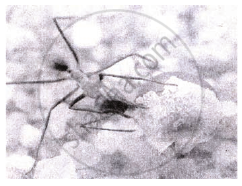 Fig. (B) |
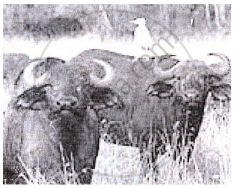 Fig. (C) |
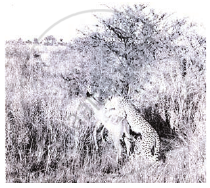 Fig. (D) |
In an aquarium two herbivorous species of fish are living together and feeding on phytoplanktons. As per the Gause’s Principle, one of the species is to be eliminated in due course of time, but both are surviving well in the aquarium. Give possible reasons.
Between which among the following, the relationship is not an example of
?
Carnivorous animals-lions and leopards, occupy the same niche but lions predate mostly larger animals and leopards take smaller ones. This mechanism of competition is referred to as ______.
Interspecific interaction could be ______.
Observe the graph given below.
|
The graph represents inter-specific interaction between two species of Paramecia competing for the same resource in a culture medium. Paramecium caudatum and Paramecium aurelia were grown in separate cultures as well as in mixed cultures. It was found that each species grew in numbers according to the logistic equation.
|

a) Which species is competitively superior? Support it with the data provided in the graph.
b) State the underlying principle for the above result and name the scientist associated with this principle.
c) Explain the mechanism in which two or more species competing with each other can co-exist.
OR
Graphs A and B shown below depict interaction of two species. Which graph indicates Mutualism? Give reason.
 |
 |
| A | B |
The diagram given below shows the life cycle of a malarial parasite. Study it carefully and answer the questions that follows:

- Name the hosts in which the asexual phase and sexual phase of the life cycle takes place.
- Identify the infective stage labelled ‘D’.
- Name the structure labelled ‘A’ and ‘E’.
- Give any one symptom of malaria.
Give one example of commensalism.
Given below are two statements.
Statement I - The amount of energy available in an ecosystem increases at each successive trophic level.
Statement II - Transfer of energy from one trophic level to the other follows 10% law.
In light of the above statements, select the correct option given below.
Statement I: Gause’s competitive exclusion principle states that two closely related species competing for different resources cannot exist indefinitely.
Statement II: According to Gause’s principle, during competition, the inferior will be eliminated. This may be true if resources are limiting.
In the light of the above statements, choose the correct answer from the options given below:
Parasitism is an interaction between two organisms in which ______.
Lichen is an example of which type of population interaction?
When two plant species in the same field compete for sunlight, water, and minerals, which type of population interaction is occurring?
In predation, what is the relationship between the predator and prey?
Tiger feeding on deer is an example of which population interaction?
Cuscuta growing on a host plant is an example of which population interaction?
In commensalism, how is the unaffected species impacted by the interaction?
