Advertisements
Advertisements
प्रश्न
Choose the correct answer:
Absorption of water from soil takes place by __________
विकल्प
root cap region
root hairs
elongation zone
maturation zone
Advertisements
उत्तर
Absorption of water from soil takes place by root hairs
APPEARS IN
संबंधित प्रश्न
Draw a magnified view of the root-hair, and describe, how it helps in the absorption of water from the soil.
Name the following:
The process by which water enters root hairs.
Explain why:
Raisins swell up in water.
The alongside diagram A shows a root hair growing through the soil particles. Diagram B is the root hair of an aquatic plant.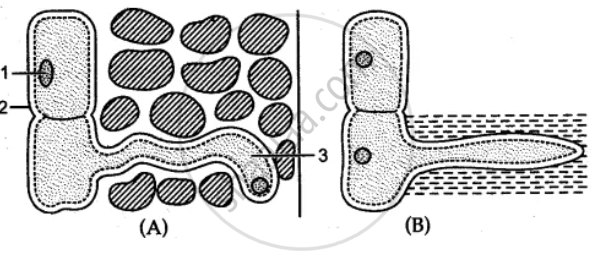
(i) Name the parts 1,2,3.
(ii) Name two substances which enter the root hair. What are their uses?
(iii) By what process do these substances enter the root hair?
(iv) Account for the different shapes of root hairs in the two diagrams.
Given below is an experimental demonstration.
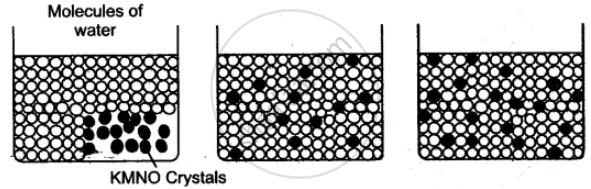
(i) Which phenomenon has been demonstrated in the given figure?
(ii) What is the solute and what is solvent in the above experiment?
(iii) Define the phenomenon in Q. (i) above.
(iv) Give one example from your daily life experiences based on this principle.
Column ‘II’ is a list of items related to ideas in Column ‘I’. Match the term in Column ‘II’ with a suitable idea given in Column ‘I’.
| Column I | Column II |
| (i) Diffusion | (a) The exit or flow of water from the cell to the outer environment. |
| (ii) Xylem | (b) The shrinkage of protoplasm when the cell is kept in a hypertonic solution. |
| (iii) Root pressure | (c) The tissue through which water and mineral salts move upward in a plant. |
| (iv) Isotonic solution | (d) Two solutions which have equal osmotic pressure. |
| (v) Exosmosis | (e) The process by which the molecules of perfume spread in the room when the bottle is open. |
| (vi) Osmosis | (f) The process by which roots absorb water from the soil. |
| (vii) Plasmolysis | (g) The pressure by which water rises up to some feet in a lofty tree. |
| (viii) Hypotonic solution | (h) The concentration of the solution when lower than that of the cell sap. |
Part of the root that absorbs water from the soil is ______.
Explain about the factors that affect water absorption.
