Advertisements
Advertisements
प्रश्न
Can you think of a situation where we deliberately want to make a species extinct? How would you justify it?
Advertisements
उत्तर
Yes, there are situations where we deliberately want to drive certain species to extinction. This argument is highly justified in the following way:
- Target Species: This classification applies to causal organisms or pathogens that trigger deadly epidemic human diseases (such as the Polio virus, HIV, and Varicella virus).
- Justification: Eradicating these disease-causing viruses is completely justified because they are extremely harmful to human health and survival. Furthermore, they do not play any beneficial role as decomposers or producers, and their elimination does not disturb the natural food chains or ecosystem stability.
APPEARS IN
संबंधित प्रश्न
Give any 'two' examples of endangered species
Substantiate with the help of one example that in an ecosystem mutualists
are also one of the major causes of biodiversity loss.
Suggest two practices giving one example of each, that help protect rare or threatened species.
Dodo bird, stellar sea cow and passenger pigeon are few examples of extinction due to ______.
Enlist any six categories into which a given species is placed once it has been thoroughly evaluated by IUCN.
Match the following and choose the correct alternative.
| Column I | Column II | ||
| i. | Not evaluated | a. | Pervasive and abundant after careful assessment |
| ii. | Near threatened | b. | Information related to risk of extinction is lacking in some way |
| iii. | Least concern | c. | Described by scientist but not assessed by the IUCN |
| iv. | Data deficient | d. | May meet the criteria for threatened status in the near future |
______ refers to the conservation of endangered species outside their natural habitats.
Currently, ______ mass extinction is considered to be the progressing at an alarming rate due to the loss of biodiversity.
Which among the following is an in situ conservation method for national genetic resources?
Threatened species are those which ______.
Which of the following is not a cause for loss of biodiversity?
The extinction of passenger pigeon was due to ______.
Which among the following forests is known as the "lungs of the planet earth"?
IUCN means
What does 'Red' indicate in the IUCN Red list (2004)?
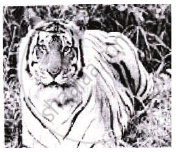
What is common to the species shown in figures A and B?
 |
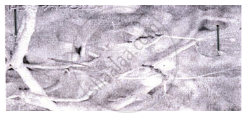 |
| A | B |
Of the four major causes for the loss of biodiversity (Alien species invasion, habitat loss and fragmentation, over-exploitation and co-extinctions which according to you is the major cause for the loss of biodiversity? Give reasons in support.
How many Biodiversity hotspots have been identified around the world?
List any three major causes of loss of biodiversity.
"Forests provide intangible benefits to us." Explain by taking three different areas, how.
The species placed in CR category is ______.
What is the sustainable use of resources?
Decline in the population of Indian native fishes due to introduction of Clarias gariepinus in river Yamuna can be catogoriesd as ______.
Which one of the following is a pair of endangered species?
The sixth extinction in progress currently is different from all previous extinctions on earth as it is ______.
Give definitions of Extinct species.
The current global biodiversity crisis is described as an ongoing mass extinction with extinction rates estimated to be how many times higher than earlier natural rates?
Reduced biodiversity in an ecosystem leads to which of the following ecological effects?
Which of the following is a natural cause (rather than a human cause) of biodiversity loss?
