Advertisements
Advertisements
प्रश्न
Can you think of a situation where we deliberately want to make a species extinct? How would you justify it?
Advertisements
उत्तर
Yes, there are situations where we deliberately want to drive certain species to extinction. This argument is highly justified in the following way:
- Target Species: This classification applies to causal organisms or pathogens that trigger deadly epidemic human diseases (such as the Polio virus, HIV, and Varicella virus).
- Justification: Eradicating these disease-causing viruses is completely justified because they are extremely harmful to human health and survival. Furthermore, they do not play any beneficial role as decomposers or producers, and their elimination does not disturb the natural food chains or ecosystem stability.
APPEARS IN
संबंधित प्रश्न
Answer the following question:
Substantiate with the help of one example that in an ecosystem mutualists
(i) tend to co-evolve and
(ii) are also one of the major causes of biodiversity loss.
Suggest two practices giving one example of each, that help protect rare or threatened species.
Dodo bird, stellar sea cow and passenger pigeon are few examples of extinction due to ______.
Match the following and choose the correct alternative.
| Column I | Column II | ||
| i. | Not evaluated | a. | Pervasive and abundant after careful assessment |
| ii. | Near threatened | b. | Information related to risk of extinction is lacking in some way |
| iii. | Least concern | c. | Described by scientist but not assessed by the IUCN |
| iv. | Data deficient | d. | May meet the criteria for threatened status in the near future |
Species that possess a very high risk of extinction due to population decline of about 30 - 50 % over past 10 years are categorized as _______.
Currently, ______ mass extinction is considered to be the progressing at an alarming rate due to the loss of biodiversity.
Accroding to IUCN Red list, the status of Antilope is ____________.
What are the major factors that are responsible for the loss of biodiversity? What steps are needed to prevent them?
Which among the following forests is known as the "lungs of the planet earth"?
Which of the following is/are endangered plant species?
Which of the following are major causes of species losses in a geographical region?
Which of these is NOT amongst the effects of loss of biodiversity?
What is common to the species shown in figures A and B?
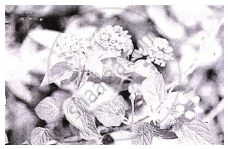 |
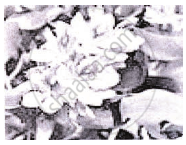 |
| A | B |
What is common to the species shown in figures A and B?
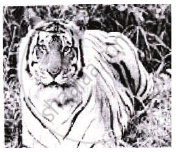 |
 |
| A | B |
What criteria should one use in categorizing a species as threatened?
There was a loss of biodiversity in the ecosystem due to a new construction project in that area. What would be its impact on the ecosystem? State any three.
List any three major causes of loss of biodiversity.
Enlist two criteria that are used to identify a region for maximum protection as 'Biodiversity hotspots'.
Name any two biodiversity hot spots in India.
The IUCN Red Data List (2004) in the last 500 years documents the extinction of nearly 784 species including ______.
Give definitions of Invasive species.
Write any three criteria on which different types of reflexes are based.
Which of the following is NOT one of the four causes grouped as the 'Evil Quartet'?
Which type of extinction is characterised by species disappearing through natural environmental changes or evolutionary processes over a slow, long-term period?
In the IUCN classification, what does the category 'EW' stand for?
Which of the following animals is correctly categorised as 'Vulnerable' under the IUCN Red List?
Which IUCN category is assigned to a species for which inadequate information is available for proper assessment?
