Advertisements
Chapters
2: Cell : The Unit of Life
3: Tissues : Plant and Animal Tissues
4: The Flower
5: Pollination and Fertilization
6: Seeds - Structure and Germination
7: Respiration in Plants
▶ 8: Five Kingdom Classification
9: Economic Importance of Bacteria and Fungi
10: Nutrition
11: Digestive System
12: Skeleton - Movement and Locomotion
13: Skin - "The Jack of all Trades"
14: The Respiratory System
15: Hygiene - [A Key to Healthy Life]
16: Diseases : Cause and Control
17: Aids to Health
18: Health Organisation
19: Waste Generation and Management
![Selina solutions for Concise Biology [English] Class 9 ICSE chapter 8 - Five Kingdom Classification - Shaalaa.com](/images/concise-biology-english-class-9-icse_6:e23b52a380cf447c9ca68da5230cf422.jpg "Selina solutions for Concise Biology [English] Class 9 ICSE chapter 8 - Five Kingdom Classification")
Advertisements
Solutions for Chapter 8: Five Kingdom Classification
Below listed, you can find solutions for Chapter 8 of CISCE Selina for Concise Biology [English] Class 9 ICSE.
Selina solutions for Concise Biology [English] Class 9 ICSE 8 Five Kingdom Classification Multiple choice type [Page 80]
The animals (Kingdom Animalia) are mainly grouped under two categories
bilaterally symmetrical and radially symmetrical
coelomate and acoelomate
aquatic and terrestrial
vertebrates and invertebrates
Which one of the following examples do not come under the particular group?
Mushroom, Yeast, Fern - Fungi
Paramoecium, Euglena, Sponge - Protista
Starfish, Cuttlefish, Dogfish - Pisces
Bat, Parrot, Oyster - Vertebrates
Which one of the following is an example of binomial scientific name?
Green alga
Snow leopard
Rana tigrina
China-rose
Which one of the following is the correct statement about the respective animal(s)?
Donkey and horse should be considered one single species because they can successfully mate and produce offspring.
Donkey and horse are two different genuses.
Mule is a separate species.
Mule is neither a donkey nor a horse.
Selina solutions for Concise Biology [English] Class 9 ICSE 8 Five Kingdom Classification Very short answer type [Page 81]
Who had introduced the binomial system of naming living beings?
Which two characters out of (a)-(e) given below are common to dog, humans, squirrel, bat, camel and monkey?
(a) scales on the skin
(b) wings
(c ) external ears
(d) give birth to young ones
(e) a functional tail
Match the items in Column I with as many as possible and even repeatedly from column II.
|
Column I |
Column II |
|
1.Pine |
(i) Fungi |
|
2. Earthworm |
(ii) Monera |
|
3. Bread mould |
(iii) Prokaryote |
|
4. Amoeba |
(iv) Gymnosperm |
|
5. Moss |
(v) Plantae |
|
6.Bacteria |
(vi) Animalia |
|
(vii) Protista |
|
|
(viii) Bryophyta |
Selina solutions for Concise Biology [English] Class 9 ICSE 8 Five Kingdom Classification Short answer type [Page 81]
Rearrange the following categories of classification in their proper sequence starting with the highest.
species, family, genus, class, order, phylum
Give the scientific names of man, domestic cat, and peepal tree.
Why are scientific names of living beings considered better than their common names?
Mention any two drawbacks in classifying organisms under the old two kingdom classification.
All humans on earth today may differ widely in their facial features, colour, height, etc. Yet, they belong to a single species Homo sapiens. Give one reason why they are not considered belonging to different species.
Rewrite the following scientific names correctly.
ficus religiosa (peepal), zea Mays (maize) and Bombyx Mori (silk moth).
Name the five kingdoms according to the new classification.
What are the group names of the following categories of animals?
Animals with a backbone _____________
What are the group names of the following categories of animals?
Animals with a hairy skin ___________
What are the group names of the following categories of animals?
Animals with three pairs of legs ___________
What are the group names of the following categories of animals?
Animals with feathers _________
Which ones of the following animals are invertebrates?
Housefly, Silverfish, Trout, Jellyfish, Whale, Penguin, Lizard and Sponge
Give any one difference between protozoa and Metazoa.
Write one difference between the following pair:
Invertebrates and Vertebrates
Give any one difference between the following :
Insecta and Arachnida
Give any one difference between the following :
Flatworm and Roundworm
Given below is an animal followed by three terms or features. Underline the term which does not match with the animal.
Amoeba - Nucleus, tentacle, food vacuole
Given below is an animal followed by three terms or features. Underline the term which does not match with the animal.
Hydra - Invertebrata, Cnidaria, Crustacea
Given below is an animal followed by three terms or features. Underline the term which does not match with the animal.
Fish - Gills, paired fins, ear drum
Given below is an animal followed by three terms or features. Underline the term which does not match with the animal.
Earthworm - Invertebrata, Annelida, Insecta
Given below is an animal followed by three terms or features. Underline the term which does not match with the animal.
Grasshopper-Wings, trachea, proboscis
Given below is an animal followed by three terms or features. Underline the term which does not match with the animal.
Butterfly- Insecta, Invertebrata, Mollusca
Given below is an animal followed by three terms or features. Underline the term which does not match with the animal.
Whale - Gills, mammary glands, fat under the skin
Given below is an animal followed by three terms or features. Underline the term which does not match with the animal.
Pigeon - Feathers, wings, hair
Given below is an animal followed by three terms or features. Underline the term which does not match with the animal.
Monkey - External ear, sweat glands, lateral line.
Given below is an animal followed by three terms or features. Underline the term which does not match with the animal.
Bat - Aves, Mammalia, Chordata
Differentiate between
warm-blooded and cold-blooded animals.
Name three animals (belonging to different classes) which breathe by means of lungs but have no external ears (pinnae).
Selina solutions for Concise Biology [English] Class 9 ICSE 8 Five Kingdom Classification Long answer type [Page 82]
Mention any one major similarity and one major difference in the following pairs of an animal:
Insects and Birds
Mention any one major similarity and one major difference in the following pairs of an animal:
Whales and Fishes
Mention any one major similarity and one major difference in the following pairs of an animal:
Snakes and Earthworms
Mention any one major similarity and one major difference in the following pairs of an animal:
Bat and Pigeon
Mention any one major similarity and one major difference in the following pairs of an animal:
Cuttlefish and Dogfish
Mention any one major similarity and one major difference in the following pairs of an animal:
Wall lizard and Frog
Match the names of animal groups in Column I with the names of animals in column II.
|
Column I (Group) |
Column II (Animals) |
|
Annelida |
Pigeon |
|
Porifera |
Snake |
|
Mollusca |
Earthworm |
|
Reptilia |
Sponge |
|
Amphibia |
Octopus |
|
Pisces |
Trout |
|
Mammal |
Rabbit |
Which names are left out that do not match and why?
Selina solutions for Concise Biology [English] Class 9 ICSE 8 Five Kingdom Classification Structured/Application/Skill type [Page 82]
TYRANNOSAURUS
(One of the extinct animals which lived on the Earth about 100,000,000 years ago) Tyrannosaurus was about six meters long and it preyed upon other animals.
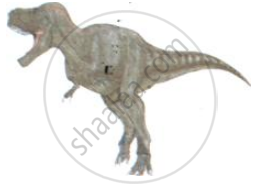
What do you think about its classification-was it an amphibian, a reptile or a mammal?
Can you call it a relative of Kangaroo? Yes/No. Give reason
Solutions for 8: Five Kingdom Classification
Selina solutions for Concise Biology [English] Class 9 ICSE chapter 8 - Five Kingdom Classification
Shaalaa.com has the CISCE Mathematics Concise Biology [English] Class 9 ICSE CISCE solutions in a manner that help students grasp basic concepts better and faster. The detailed, step-by-step solutions will help you understand the concepts better and clarify any confusion. Selina solutions for Mathematics Concise Biology [English] Class 9 ICSE CISCE 8 (Five Kingdom Classification) include all questions with answers and detailed explanations. This will clear students' doubts about questions and improve their application skills while preparing for board exams.
Further, we at Shaalaa.com provide such solutions so students can prepare for written exams. Selina textbook solutions can be a core help for self-study and provide excellent self-help guidance for students.
Concepts covered in Concise Biology [English] Class 9 ICSE chapter 8 Five Kingdom Classification are Concept of Species, Two Kingdom Classification, Five Kingdom Classification, Invertebrata and Vertebrata, Kingdom Animalia, Kingdom Monera, Three Kingdom Classification, Four Kingdom Classification, Kingdom Fungi, Kingdom Plantae, Cryptogams > Division II- Bryophytes, Cryptogams > Division III- Pteridophytes, Phanerogams > Division I-Gymnosperms, Introduction of Biological Classification, Differences Between Plantae (Plants) and Animalia (Animals), Sub-division Algae, Phylum: Porifera, Phylum: Cnidaria/Coelenterata, Phylum: Platyhelminthes, Invertebrate: Phylum Nematoda, Phylum: Arthropoda, Phylum: Mollusca, Phylum: Echinodermata, Kingdom Protista, Taxonomy and Systematics, Phylum: Annelida, Nomenclature, Subphylum: Vertebrata/Craniata, Phanerogams > Division II- Angiosperms.
Using Selina Concise Biology [English] Class 9 ICSE solutions Five Kingdom Classification exercise by students is an easy way to prepare for the exams, as they involve solutions arranged chapter-wise and also page-wise. The questions involved in Selina Solutions are essential questions that can be asked in the final exam. Maximum CISCE Concise Biology [English] Class 9 ICSE students prefer Selina Textbook Solutions to score more in exams.
Get the free view of Chapter 8, Five Kingdom Classification Concise Biology [English] Class 9 ICSE additional questions for Mathematics Concise Biology [English] Class 9 ICSE CISCE, and you can use Shaalaa.com to keep it handy for your exam preparation.
