Advertisements
Advertisements
Why do solids, liquids, and gases differ in their physical states?
Concept: undefined >> undefined
Convert the following quantity as indicated:
0.2 km = m
Concept: undefined >> undefined
Advertisements
Convert the following quantity as indicated:
0.2 cm = mm
Concept: undefined >> undefined
Define interconversion of states of matter.
Concept: undefined >> undefined
What are the two conditions for the interconversion of states of matter?
Concept: undefined >> undefined
How a liquid changes into its gaseous state? Explain?
Concept: undefined >> undefined
Convert the following quantity as indicated:
1 yard = m
Concept: undefined >> undefined
Water cycle is an example of interconversion of states of water. Explain.
Concept: undefined >> undefined
State the general properties of a solid.
Concept: undefined >> undefined
Why liquids do not have definite shape?
Concept: undefined >> undefined
Name the device which you will use to measure the perimeter of your playground. Describe in steps how you will use it.
Concept: undefined >> undefined
The diagram below shows a stick placed along a metre RULER. The length of the stick is measured keeping the eye at positions A, B, and C.
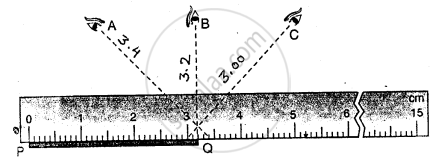
Concept: undefined >> undefined
What happens when a solid is heated?
Concept: undefined >> undefined
Give a reason for the Gases can be compressed easily.
Concept: undefined >> undefined
Give a reason for the Liquids can flow easily.
Concept: undefined >> undefined
Give a reason for the We need to classify things.
Concept: undefined >> undefined
Convert the following quantity as indicated:
2500 kg = ………. metric tonne.
Concept: undefined >> undefined
Give a reason for the Pure substances have fixed melting or boiling points.
Concept: undefined >> undefined
Convert the following quantity as indicated:
150 kg = quintal
Concept: undefined >> undefined
Convert the following quantity as indicated:
10 lb = ………. kg
Concept: undefined >> undefined
