English

Science (English Medium) Class 12 - CBSE Question Bank Solutions for Chemistry

Advertisements
[object Object]
[object Object]
Subjects
Popular subjects
Topics
Advertisements
Advertisements
Chemistry
< prev  1301 to 1320 of 4805  next > 

Which of the following will have the maximum dipole moment?

[6] Haloalkanes and Haloarenes
Chapter: [6] Haloalkanes and Haloarenes
Concept: undefined >> undefined

Which among the following is the simplest sugar?

[10] Biomolecules
Chapter: [10] Biomolecules
Concept: undefined >> undefined

Advertisements

\[\ce{CH3-O-CH(CH3)2 + HI ->}\] Products is/are:

[7] Alcohols, Phenols and Ethers
Chapter: [7] Alcohols, Phenols and Ethers
Concept: undefined >> undefined

In lake test for Al3+ ions, there is the formation of coloured ‘floating lake’. It is due to ______.

[4] d-block and f-block Elements
Chapter: [4] d-block and f-block Elements
Concept: undefined >> undefined

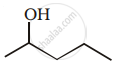
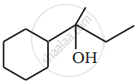
Which one of the following are correctly arranged on the basis of the property indicated?

[7] Alcohols, Phenols and Ethers
Chapter: [7] Alcohols, Phenols and Ethers
Concept: undefined >> undefined

Read the passage given below and answer the following question:

The transition metals when exposed to oxygen at low and intermediate temperatures form thin, protective oxide films of up to some thousands of Angstroms in thickness. Transition metal oxides lie between the extremes of ionic and covalent binary compounds formed by elements from the left or right side of the periodic table. They range from metallic to semiconducting and deviate by both large and small degrees from stoichiometry. Since electron bonding levels are involved, the cations exist in various valence states and hence give rise to a large number of oxides. The crystal structures are often classified by considering a cubic or hexagonal close-packed lattice of one set of ions with the other set of ions filling the octahedral or tetrahedral interstices. The actual oxide structures, however, generally show departures from such regular arrays due in part to distortions caused by packing of ions of different size and to ligand field effects. These distortions depend not only on the number of d-electrons but also on the valence and the position of the transition metal in a period or group.

In the following questions, a statement of assertion followed by a statement of reason is given. Choose the correct answer out of the following choices on the basis of the above passage.

Assertion: Cations of transition elements occur in various valence states.

Reason: Large number of oxides of transition elements are possible.

[4] d-block and f-block Elements
Chapter: [4] d-block and f-block Elements
Concept: undefined >> undefined

Read the passage given below and answer the following question:

The transition metals when exposed to oxygen at low and intermediate temperatures form thin, protective oxide films of up to some thousands of Angstroms in thickness. Transition metal oxides lie between the extremes of ionic and covalent binary compounds formed by elements from the left or right side of the periodic table. They range from metallic to semiconducting and deviate by both large and small degrees from stoichiometry. Since electron bonding levels are involved, the cations exist in various valence states and hence give rise to a large number of oxides. The crystal structures are often classified by considering a cubic or hexagonal close-packed lattice of one set of ions with the other set of ions filling the octahedral or tetrahedral interstices. The actual oxide structures, however, generally show departures from such regular arrays due in part to distortions caused by packing of ions of different size and to ligand field effects. These distortions depend not only on the number of d-electrons but also on the valence and the position of the transition metal in a period or group.

In the following questions, a statement of assertion followed by a statement of reason is given. Choose the correct answer out of the following choices on the basis of the above passage.

Assertion: Crystal structure of oxides of transition metals often show defects.

Reason: Ligand field effect cause distortions in crystal structures.

[4] d-block and f-block Elements
Chapter: [4] d-block and f-block Elements
Concept: undefined >> undefined

Read the passage given below and answer the following question:

The transition metals when exposed to oxygen at low and intermediate temperatures form thin, protective oxide films of up to some thousands of Angstroms in thickness. Transition metal oxides lie between the extremes of ionic and covalent binary compounds formed by elements from the left or right side of the periodic table. They range from metallic to semiconducting and deviate by both large and small degrees from stoichiometry. Since electron bonding levels are involved, the cations exist in various valence states and hence give rise to a large number of oxides. The crystal structures are often classified by considering a cubic or hexagonal close-packed lattice of one set of ions with the other set of ions filling the octahedral or tetrahedral interstices. The actual oxide structures, however, generally show departures from such regular arrays due in part to distortions caused by packing of ions of different size and to ligand field effects. These distortions depend not only on the number of d-electrons but also on the valence and the position of the transition metal in a period or group.

In the following questions, a statement of assertion followed by a statement of reason is given. Choose the correct answer out of the following choices on the basis of the above passage.

Assertion: Transition metals form protective oxide films.

Reason: Oxides of transition metals are always stoichiometric.

[4] d-block and f-block Elements
Chapter: [4] d-block and f-block Elements
Concept: undefined >> undefined

The lattice site in a pure crystal cannot be occupied by ______.

[1] Solid State
Chapter: [1] Solid State
Concept: undefined >> undefined

A first order reaction is 50% completed in 1.26 × 10¹⁴ s. How much time would it take for 100% completion?

[3] Chemical Kinetics
Chapter: [3] Chemical Kinetics
Concept: undefined >> undefined

Which of the following graphs is correct for a first order reaction?

[3] Chemical Kinetics
Chapter: [3] Chemical Kinetics
Concept: undefined >> undefined

State a condition under which a bimolecular reaction is kinetically first order reaction.

[3] Chemical Kinetics
Chapter: [3] Chemical Kinetics
Concept: undefined >> undefined

With the help of an example explain what is meant by pseudo first order reaction.

[3] Chemical Kinetics
Chapter: [3] Chemical Kinetics
Concept: undefined >> undefined

Extent of physisorption of a gas increases with ______.

[5] Surface Chemistry
Chapter: [5] Surface Chemistry
Concept: undefined >> undefined

Which of the following is not a favourable condition for physical adsorption?

[5] Surface Chemistry
Chapter: [5] Surface Chemistry
Concept: undefined >> undefined

Physical adsorption of a gaseous species may change to chemical adsorption with ______.

[5] Surface Chemistry
Chapter: [5] Surface Chemistry
Concept: undefined >> undefined

In physisorption adsorbent does not show specificity for any particular gas because ______.

[5] Surface Chemistry
Chapter: [5] Surface Chemistry
Concept: undefined >> undefined

In which of the following reactions heterogenous catalysis is involved?

(a) \[\ce{2SO2 (g) + O2 (g) ->[NO(g)] 2SO3 (g)}\]

(b) \[\ce{2SO2 (g) ->[Pt(s)] 2SO3 (g)}\]

(c) \[\ce{N2 (g) + 3H2 (g) ->[Fe(s)] 2NH3 (g)}\]

(d) \[\ce{CH3COOCH3 (l) + H2O (l) ->[HCI(l)] CH3COOH (aq) + CH3OH (aq)}\]

[5] Surface Chemistry
Chapter: [5] Surface Chemistry
Concept: undefined >> undefined

Why is it important to have clean surface in surface studies?

[5] Surface Chemistry
Chapter: [5] Surface Chemistry
Concept: undefined >> undefined

Why is chemisorption referred to as activated adsorption?

[5] Surface Chemistry
Chapter: [5] Surface Chemistry
Concept: undefined >> undefined
< prev  1301 to 1320 of 4805  next > 
Advertisements
Advertisements
CBSE Science (English Medium) Class 12 Question Bank Solutions
Question Bank Solutions for CBSE Science (English Medium) Class 12 Biology
Question Bank Solutions for CBSE Science (English Medium) Class 12 Chemistry
Question Bank Solutions for CBSE Science (English Medium) Class 12 Computer Science (C++)
Question Bank Solutions for CBSE Science (English Medium) Class 12 Computer Science (Python)
Question Bank Solutions for CBSE Science (English Medium) Class 12 English Core
Question Bank Solutions for CBSE Science (English Medium) Class 12 English Elective - NCERT
Question Bank Solutions for CBSE Science (English Medium) Class 12 Entrepreneurship
Question Bank Solutions for CBSE Science (English Medium) Class 12 Geography
Question Bank Solutions for CBSE Science (English Medium) Class 12 Hindi (Core)
Question Bank Solutions for CBSE Science (English Medium) Class 12 Hindi (Elective)
Question Bank Solutions for CBSE Science (English Medium) Class 12 History
Question Bank Solutions for CBSE Science (English Medium) Class 12 Informatics Practices
Question Bank Solutions for CBSE Science (English Medium) Class 12 Mathematics
Question Bank Solutions for CBSE Science (English Medium) Class 12 Physical Education
Question Bank Solutions for CBSE Science (English Medium) Class 12 Physics
Question Bank Solutions for CBSE Science (English Medium) Class 12 Political Science
Question Bank Solutions for CBSE Science (English Medium) Class 12 Psychology
Question Bank Solutions for CBSE Science (English Medium) Class 12 Sanskrit (Core)
Question Bank Solutions for CBSE Science (English Medium) Class 12 Sanskrit (Elective)
Question Bank Solutions for CBSE Science (English Medium) Class 12 Sociology
Share
Notifications

Englishहिंदीमराठी


      Forgot password?
Use app×