Advertisements
Advertisements
Write the formula and hybridization of the following compound:
tris(ethane-1, 2–diamine) cobalt(III) sulphate
Concept: undefined >> undefined
Write the IUPAC name for the following organic compound:
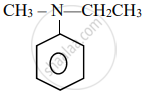
Concept: undefined >> undefined
Advertisements
What is synthetic polymer? Give two examples of synthetic polymers.
Concept: undefined >> undefined
Classify the following compound as a primary, secondary and tertiary halide.
1-Bromobut-2-ene
Concept: undefined >> undefined
Classify the following compound as a primary, secondary and tertiary halide.
4-Bromopent-2-ene
Concept: undefined >> undefined
Write the reaction and IUPAC name of the product formed when 2-Methylpropanal (isobutyraldehyde) is treated with ethyl magnesium bromide followed by hydrolysis.
Concept: undefined >> undefined
Why are haloalkanes more reactive towards nucleophilic substitution reactions than haloarenes and vinylic halides?
Concept: undefined >> undefined
Write the IUPAC name of the following complex:
K2[PdCl4]
Concept: undefined >> undefined
Complete the following:
\[\ce{CH3CN ->[1. AlH(i - Bu)2][2. H2O] 'A' ->[H2N-OH][H^+] 'B'}\]
Concept: undefined >> undefined
Write IUPAC name of the following compound:
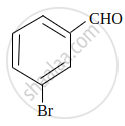
Concept: undefined >> undefined
Read the passage given below and answer the questions that follow:
|
Oxidation-reduction reactions are commonly known as redox reactions. They involve transfer of electrons from one species to another. In a spontaneous reaction, energy is released which can be used to do useful work. The reaction is split into two half-reactions. Two different containers are used and a wire is used to drive the electrons from one side to the other and a Voltaic/Galvanic cell is created. It is an electrochemical cell that uses spontaneous redox reactions to generate electricity. A salt bridge also connects to the half-cells. The reading of the voltmeter gives the cell voltage or cell potential or electromotive force. If \[\ce{E^0_{cell}}\] is positive the reaction is spontaneous and if it is negative the reaction is non-spontaneous and is referred to as electrolytic cell. Electrolysis refers to the decomposition of a substance by an electric current. One mole of electric charge when passed through a cell will discharge half a mole of a divalent metal ion such as Cu2+. This was first formulated by Faraday in the form of laws of electrolysis.
|

- Is silver plate the anode or cathode? (1)
- What will happen if the salt bridge is removed? (1)
- When does electrochemical cell behaves like an electrolytic cell? (1)
- (i) What will happen to the concentration of Zn2+ and Ag+ when Ecell = 0. (1)
(ii) Why does conductivity of a solution decreases with dilution? (1)
OR
The molar conductivity of a 1.5 M solution of an electrolyte is found to be 138.9 S cm2mol-1. Calculate the conductivity of this solution. (2)
Concept: undefined >> undefined
Write the IUPAC name of the following complex:
[Pt(NH3)6]Cl4
Concept: undefined >> undefined
Using IUPAC norms, write the formula for the following:
Pentaamminenitrito-N-Cobalt (III)
Concept: undefined >> undefined
Using IUPAC norms write the formula for the following:
Tetrahydroxidozincate (II)
Concept: undefined >> undefined
Differentiate between the following:
Adsorption and Absorption
Concept: undefined >> undefined
Which of the following belongs to the class of vinyl halides?
Concept: undefined >> undefined
What is the secondary valency of cobalt in [Co(en2)Cl2]+?
Concept: undefined >> undefined
What should be the signs (positive/negative) for \[\ce{E^0_{cell}}\] and ΔG0 for a spontaneous redox reaction occurring under standard conditions?
Concept: undefined >> undefined
Assertion (A): [Co(NH3)5SO4]Cl gives a white precipitate with silver nitrate solution.
Reason (R): The complex dissociates to give Cl− and \[\ce{SO^{2-}_4}\] ions.
Concept: undefined >> undefined
What is IUPAC name of the ketone A, which undergoes iodo form reaction to give \[\ce{CH3CH = C(CH3)COONa}\] and yellow precipitate of \[\ce{CH3}\]?
Concept: undefined >> undefined
