Advertisements
Advertisements
Questions
The partition of Bengal and the formation of the Muslim League were two important events that had an impact on the national struggle for independence. In this context, explain the following:
Any three factors relating to the formation of the Muslim League.
The reasons for the formation of the Muslim League were many. In this context, explain:
Any three factors that led to the formation of the League in India.
Advertisements
Solution
The following three factors were responsible for the formation of the Muslim League:
Loss of Sovereignty by Mughal Rulers: The British established their absolute rule over the Indian peninsula when they dethroned the Mughal rulers. Because the Mughal throne had a symbolic importance and emotional value for the common Muslims in India, it was seen as an attack on the Muslim identity itself. As a result, Muslims became bitter critics of British rule and vigorously participated in the 1857 rebellion. The British in response persecuted the Muslims after quelling the
rebellion. However, after 1870, there was a sea change in their attitude as there was
a realisation that dividing the Hindus and Muslims was necessary to quell the rising tide of nationalism. As a result, the colonial government adopted a policy of appeasement towards the Muslims and encouraged them to form their own political associations.
British Policy of Divide and Rule: To maintain their hold over India, the British government began to follow their infamous policy of ‘Divide and Rule’. In 1871, the government adopted a resolution which made Urdu the medium of instruction for Muslims in primary and secondary schools and increased the government aid to Muslim education institutions. Muslim rulers were portrayed as plunderers and
Hindu rulers as cruel to their Muslim subjects. The partition of Bengal was also publicised as a move in the interest of Muslims. Caste and religion fault lines were magnified on purpose through the press, posters and literature, and communal leaders were accepted as authentic representatives of their communities.
Relative Backwardness of Muslim Community: The communal and separatist trend of thinking grew among the Muslims because of their then relative backwardness in education, trade and industry. Because of the hostility of upper-class Muslim zamindars and aristocrats towards the British, Muslims largely remained aloof from modern western education. Because the British also regarded
them as responsible for the 1857 rebellion, they were discriminated against. Muslims were not involved in the growth of any organised industry and did not take advantage of western education to enter government services. As a result, they did not get influenced by liberalism as the Hindus of that time did.
APPEARS IN
RELATED QUESTIONS
The partition of Bengal and the formation of the Muslim League were two important events that had an impact on the national struggle for independence. In this context, explain the following:
Impact of the Swadeshi and Boycott movements as part of the Anti-Partition Movement.
The reasons for the formation of the Muslim League were many. In this context, explain:
Any three demands made by the Muslim Deputation in 1906 to the Viceroy Lord Minto.
Name the Viceroy who was responsible in 1909, for granting separate electorates on the basis of communal representation.
How did the biased presentation of historical events spread hatred between the communities?
With the help of economic backwardness, describe briefly the development of separatist trend among the Muslims in India.
How the religious sentiments among the aggressive nationalists, resulted in the development of separatist trend among the Muslims in India.
Why did Sir Syed Ahmed Khan oppose the policies of the Indian National Congress?
Give any two demands forwarded by the deputation led by Aga Khan.
How did the educational backwardness of the Muslims lead to the growth of communalism in the early years of the 20th century.
Answer the following:
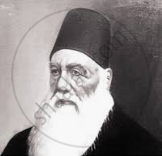
(i) Name the famous Muslim reformer in the picture.
(ii) Name the educational insitution founded by him. What was his objective?
