Advertisements
Advertisements
Question
The composition of the nuclei of two atomic species X and Y are given as under
| X | Y | |
| Protons | 6 | 6 |
| Neutrons | 6 | 8 |
Give the mass numbers of X and Y. What is the relation between the two species?
Advertisements
Solution
Mass number of X = Number of protons + Number of neutrons
= 6 + 6
= 12
Mass number of Y = Number of protons + Number of neutrons
= 6 + 8
= 14
These two atomic species X and Y have the same atomic number, but different mass numbers. Hence, they are isotopes.
APPEARS IN
RELATED QUESTIONS
Which of the following are isoelectronic species i.e., those having the same number of electrons?
Na+, K+, Mg2+, Ca2+, S2–, Ar
FILL IN THE BLANK
Atomic theory of matter was given by ..........................
Fill in the blank of the following statement :
The total number of protons and neutrons in the nucleus of an atom is called its _________.
The atom of an element X has 7 electrons in its M shell.
What is the atomic number of element X?
The diagram represents an isotope of hydrogen [H]. Answer the following:
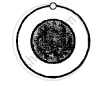
Atomic no. = 1
Mass no. = 1
Do isotopes have the same atomic number or the same mass number?
Every atom has an equal number of protons and electrons. The nature of the atom is ______.
K and L shells can accommodate a maximum of 2 and 8 electrons respectively.
If element M has mass number 24 and atomic number 12, how many neutrons does its atom contain?
Element ‘P' has electronic configuration 2,8,8,1. The number of chlorine atoms present in the chloride of ‘P’ is ______.
A group of elements in the periodic table is given below (Boron is the first member of the group and Thallium is the last).
Boron, Aluminium, Gallium, Indium, Thallium
Answer the following question in relation to the above group of elements:
The atomic number of boron is 5. Write the chemical formula of the compound formed when boron reacts with chlorine.
