Advertisements
Advertisements
Question
Study the picture and answer the following questions:
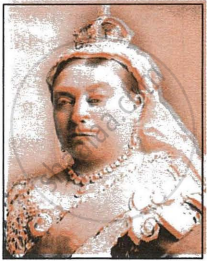
- Identify the person in the picture. Name the proclamation made by her in 1858.
- Where and by whom was this proclamation made public?
- What assurance did this proclamation give to the Indian people regarding
- religious freedom and
- appointment to public offices?
Advertisements
Solution
- The person in the photo is Queen Victoria. The Proclamation was referred to as the Queen's Proclamation.
- Lord Canning, the first Viceroy of India, declared it on November 1, 1858, in Allahabad. The Queen’s Proclamation incorporating the governance transfer from the East India Company to the British Crown became public.
-
- In her 1858 Proclamation, Queen Victoria committed not to meddle with the religious beliefs of the Indian people.
- The Queen also guaranteed equitable treatment for all of her people, including Indians and Europeans. All appointments declared by the Queen would be based only on education, ability, and honesty.
RELATED QUESTIONS
Answer the following question briefly:
In the context of the Revolt of 1857, briefly discuss:
Any four results of the Revolt of 1857
This is the picture of the queen who led the Revolt in Central India.

What was the major outcome of the Revolt of 1857?
Give a reason why:
State of Awadh was annexed by the British.
The Revolt of 1857 was the beginning of the independence struggle against the colonial rule of the British. With reference to the consequences of the Revolt, answer the following:
Mention any three changes made in the administration with the end of the Company's Rule.
The Revolt of 1857 was the beginning of the independence struggle against the colonial rule of the British. With reference to the consequences of the Revolt, answer the following:
Mention any four changes made in the army after the Revolt.
The Indian Rebellion of 1857 was a major uprising against the rule of the British East India Company, which functioned as a sovereign power on behalf of the British Crown. With reference to this, answer the following question:
How did the failure of this revolt impact the Mughals and the Peshwas?
The Indian Rebellion of 1857 was a major uprising against the rule of the British East India Company, which functioned as a sovereign power on behalf of the British Crown. With reference to this, answer the following question:
The India army was reorganised after 1858, to prevent the reoccurrence of another uprising. Analyse this statement by stating any four changes made in the army after the Revolt.
Which of the following was the result of the Great Uprising of 1857?
Under the Government of India Act 1858, who gave up the direct administration of India?
State any two consequences of the disbanding of the armies of the annexed States by the British.
