Advertisements
Advertisements
Question
Reduce the following rational expression to its lowest form
`("p"^2 - 3"p" - 40)/(2"p"^3 - 24"p"^2 + 64"p")`
Advertisements
Solution
`("p"^2 - 3"p" - 40)/(2"p"^3 - 24"p"^2 + 64"p")`
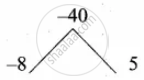
p2 – 3p – 40 = (p – 8) (p + 5)
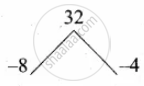
2p3 – 24p2 + 64p = 2p (p2 – 12p + 32)
= 2p (p – 8) (p – 4)
`("p"^2 - 3"p" - 40)/(2"p"^3 - 24"p"^2 + 64"p") = (("p" - 8)("p" + 5))/(2"p"("p" - 8)("p" - 4))`
= `("p" + 5)/(2"p"("p" - 4))`
APPEARS IN
RELATED QUESTIONS
Reduce the following rational expression to its lowest form
`(9x^2 + 81x)/(x^3 + 8x^2 - 9x)`
Find the excluded values, of the following expression
`"t"/("t"^2 - 5"t" + 6)`
Find the excluded values, of the following expression
`(x^2 + 6x + 8)/(x^2 + x - 2)`
Simplify `(4x^2y)/(2z^2) xx (6xz^3)/(20y^4)`
Simplify `(x(x + 1))/(x - 2) + (x(1 - x))/(x - 2)`
Simplify `(x + 2)/(x + 3) + (x - 1)/(x - 2)`
Pari needs 4 hours to complete the work. His friend Yuvan needs 6 hours to complete the same work. How long will it take to complete if they work together?
`(3y - 3)/y ÷ (7y - 7)/(3y^2)` is
Arul, Madan and Ram working together can clean a store in 6 hours. Working alone, Madan takes twice as long to clean the store as Arul does. Ram needs three times as long as Arul does. How long would it take each if they are working alone?
A boat takes 1.6 hours longer to go 36 kms up a river than down the river. If the speed of the water current is 4 km per hr, what is the speed of the boat in still water?
