Advertisements
Advertisements
Question
Product differentiation is practised in monopolistic competition? Give reasons.
Advertisements
Solution 1
Product differentiation is a key characteristic of monopolistic competition.
Reasons:
- Many Sellers: In a monopolistic competition market, numerous sellers offer comparable but distinct products. Product differentiation enables each supplier to stand out and attract a certain group of buyers.
-
Non-Price Competition: Because products differ, businesses compete on variables other than price, such as quality, design, branding, packaging, and customer service. This helps them build client loyalty while reducing direct pricing competition.
- Consumer Preferences: Because people's interests, lives, and needs differ, businesses differentiate their products to meet those preferences. This differentiation gives consumers more options, even if the main product is identical.
- Branding and Advertising: Companies in monopolistic competition participate significantly in branding and advertising to highlight their product's unique features and establish a sense of difference in the eyes of consumers. This strengthens the concept of differentiation.
Thus, product differentiation is a critical component of monopolistic competition, allowing firms to figure out a market for themselves in a competitive marketplace.
Solution 2
Product differentiation is the key element in monopolistic competition. Because various firms' products are similar but differentiated in brand name, shape and size, colour, quality, type of service, etc. For example, different toothpaste brands vary based on colour, taste, fluoride, packaging, etc. The goal of product differentiation is to give customers the impression that a product from one seller is different from one from another seller. Products are very similar but not identical.
RELATED QUESTIONS
Identify the market having a single buyer and many sellers from the following:
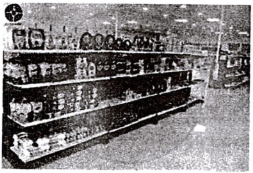
The image above shows a departmental store of a market structure.
- Identify the form of market as observed from the above image.
- Discuss the features of this market form with respect to:
- Type of product
- Entry and exit of firms
- Selling cost
How is Perfect competitive market is different from a monopoly market?
Read the given statements carefully and select the correct option.
- The number of sellers under oligopoly are small.
- In monopolistically competitive markets, buyers and sellers have perfect knowledge about the market conditions.
There are no substitute goods in a monopoly market. Give a reason to support your answer.
State two important characteristics of monopoly.
Identify the market form of the following:
Market for toilet soaps in India.
Identify the market form for the following:
Textile industry in India.
State the market form of the following commodity.
Fighter Aircrafts
Identify the market form for the item given below:
A single buyer
In which form of market do producers and consumers have perfect knowledge about the market conditions?
Which type of market structure is the following? Give reason.
Trucks
Which type of market structure is the following? Give reason.
Scooters
What is meant by barriers to entry?
Identify the market form from the following.
Firm is a price maker.
Mention one feature of a monopoly market.
Name the characteristic which makes monopolistic competition different from perfect competition.
In which market form is there a single seller and no close substitutes for the product?
Which statement correctly describes monopsony?
