Advertisements
Advertisements
Question
Complete the following table.
| Atomic Number | Mass Number | Number of Neutrons | Number of Protons | Number of Electrons | Name of the Element |
| 9 | ______ | 10 | ______ | ______ | ______ |
| 16 | ______ | 16 | ______ | ______ | ______ |
| ______ | 24 | ______ | ______ | 12 | Magnesium |
| ______ | 2 | ______ | 1 | ______ | ______ |
| ______ | 1 | 0 | 1 | 1 | ______ |
Advertisements
Solution
| Atomic Number | Mass Number | Number of Neutrons | Number of Protons | Number of Electrons | Name of the Element |
| 9 | 19 | 10 | 9 | 9 | Potassium |
| 16 | 32 | 16 | 16 | 16 | Sulphur |
| 12 | 24 | 12 | 12 | 12 | Magnesium |
| 1 | 2 | 1 | 1 | 1 | Deuterium |
| 1 | 1 | 0 | 1 | 1 | Hydrogen |
APPEARS IN
RELATED QUESTIONS
WRITE SHORT ANSWER
Define the atomic mass number of an atom.
Define the following form:
Atomic number
Match the atomic numbers 4,8,10,15 and 19 with the following:
Element which can form trivalent ion
The diagram represents an isotope of hydrogen [H]. Answer the following:
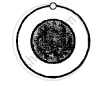
Atomic no. = 1
Mass no. = 1
Which sub-atomic particles in the 3 isotopes of ‘H’ are the same.
The atomic number of an element is 9, it has 10 neutrons. Find the element from the periodic table. What will be its mass number?
Which of the following are true for an element?
- Atomic number = number of protons + number of electrons
- Mass number = number of protons + number of neutrons
- Atomic mass = number of protons = number of neutrons
- Atomic number = number of protons = number of electrons
Every atom has an equal number of protons and electrons. The nature of the atom is ______.
The No. of electrons in the outermost shell of the atom of an inert gas ______.
‘A’ is denoted by ______.
Compare the charge and mass of protons and electrons.
