Advertisements
Advertisements
An emf of 96.0 mV is induced in the windings of a coil when the current in a nearby coil is increasing at the rate of 1.20 A/s. What is the mutual inductance (M) of the two coils?
Concept: undefined >> undefined
A long solenoid of length l, cross-sectional area A and having N1 turns (primary coil), has a small coil of N2 turns (secondary coil) wound about its center. Determine the Mutual inductance (M) of the two coils.
Concept: undefined >> undefined
Advertisements
What will be the energy of each photon in monochromatic light of frequency 5 ×10¹⁴Hz?
Concept: undefined >> undefined
Determine the series limit of Balmer, Paschen, and Pfund series, given the limit for Lyman series is 912 Å.
Concept: undefined >> undefined
In a BJT, the largest current flow occurs ______.
Concept: undefined >> undefined
Why is the base of a transistor made thin and is lightly doped?
Concept: undefined >> undefined
Answer in brief:
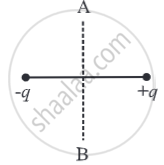
A charge q is moved from a point A above a dipole of dipole moment p to a point B below the dipole in an equatorial plane without acceleration. Find the work done in this process.
Concept: undefined >> undefined
Why are the emitter, the base, and the collector of a BJT doped differently?
Concept: undefined >> undefined
The common-base DC current gain of a transistor is 0.967. If the emitter current is 10mA. What is the value of base current?
Concept: undefined >> undefined
In a common-base connection, a certain transistor has an emitter current of 10mA and a collector current of 9.8 mA. Calculate the value of the base current.
Concept: undefined >> undefined
In a common-base connection, the emitter current is 6.28 mA and the collector current is 6.20 mA. Determine the common-base DC current gain.
Concept: undefined >> undefined
A mixture of fuel and oxygen is burned in a constant-volume chamber surrounded by a water bath. It was noticed that the temperature of water is increased during the process. Treating the mixture of fuel and oxygen as the system,
- Has heat been transferred?
- Has work been done?
- What is the sign of ∆U?
Concept: undefined >> undefined
A system releases 130 kJ of heat while 109 kJ of work is done on the system. Calculate the change in internal energy.
Concept: undefined >> undefined
In SI units, the differential equation of an S.H.M. is `(d^2x)/(dt^2)` = − 36x. Find its frequency and period.
Concept: undefined >> undefined
Three charges –q, +Q, and –q are placed at equal distances on a straight line. If the potential energy of the system of the three charges is zero, then what is the ratio of Q: q?
Concept: undefined >> undefined
A dipole with its charges, - q and + q located at the points (O, -b, O) and (O, +b, O) is present in a uniform electric field E. The equipotential surfaces of this field are planes parallel to the yz plane.
(a) What is the direction of the electric field E?
(b) How much torque would the dipole experience in this field?
Concept: undefined >> undefined
A rod of magnetic material of cross-section 0.25 cm2 is placed in a magnetizing field of intensity 4000 A/m-1. The magnetic flux passing through the rod is 25 × 10-6 Wb. Find out
(a) relative permeability
(b) magnetic susceptibility and
(c) magnetisation of the rod.
Concept: undefined >> undefined
A rod of magnetic material of cross-section 0.25 cm2 is placed in a magnetizing field of intensity 4000 A/m-1. The magnetic flux passing through the rod is 25 × 10-6 Wb. Find out
(a) relative permeability
(b) magnetic susceptibility and
(c) magnetisation of the rod.
Concept: undefined >> undefined
A uniform magnetic field B(t), pointing upward fills a circular region of radius, s in a horizontal plane. If B is changing with time, find the induced electric field.
Concept: undefined >> undefined
The mutual inductance of two coils is 10 mH. If the current in one of the coil changes from 5 A to 1 A in 0.2 s, calculate the emf induced in the other coil. Also calculate the induced charge flowing through the coil if its resistance is 5 Ω.
Concept: undefined >> undefined
