Please select a subject first
Advertisements
Advertisements
दिए गए निर्देश के अनुसार परिवर्तन कीजिए:
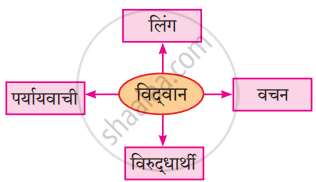
Concept: undefined >> undefined
पर्यायवाची शब्द लिखिए:
अधर -
Concept: undefined >> undefined
Advertisements
पर्यायवाची शब्द लिखिए:
आँखें -
Concept: undefined >> undefined
निम्नलिखित गद्यांश पढ़कर ऐसे चार प्रश्न तैयार कीजिए जिनके उत्तर गद्यांश में एक-एक वाक्य में हों।
| महात्मा गाँधी ने पुस्तकों को व्यक्ति का सच्चा मित्र कहा है। पुस्तकों से अधिक आनंद और कहीं, किसी वस्तु में नहीं है। पुस्तकें ज्ञान का भंडार होती हैं। पुस्तकों में समाज पर प्रभाव डालने की अद्भुत क्षमता होती है। पुस्तक में ऐसी शक्ति होती है कि वह सोए देश में जागृति मंत्र फूँक दे, कमजोर मानव को बल दे, राजनेताओं पर अंकुश रखे। रूसो की पुस्तक फ्रांस में क्रांति का कारण बनी। लेनिन की पुस्तक रूस में मार्गदर्शक बनी तो गाँधी के विचार भारत को स्वतंत्र करा गए। इस प्रकार हम देखते हैं कि पुस्तकें पलभर में बादशाहत को पलटने की क्षमता रखती हैं। पुस्तकें लेखकों को अमर बना देती हैं। हम आज भी सूर, तुलसी, वाल्मीकि का नाम बहुत श्रद्धा से लेते हैं। पुस्तकें अकेलेपन की साथी भी हैं; क्योंकि ये अकेलेपन को भुलाए रहती हैं। |
Concept: undefined >> undefined
‘विश्वबंधुता वर्तमान युग की माँग’ विषय पर अस्सी से सौ शब्दों में निबंध लिखिए।
Concept: undefined >> undefined
निम्नलिखित विषय पर 60-70 शब्दों में निबंध लिखिए:
मेरा प्रिय नेता
Concept: undefined >> undefined
निम्नलिखित विषय पर 60 - 70 शब्दों में निबंध लिखिए:
मोबाइल की उपयोगिता
Concept: undefined >> undefined
निम्नलिखित विषय पर 80 से 100 शब्दों में निबंध लिखिए:
मेरा प्रिय त्योहार
Concept: undefined >> undefined
निम्नलिखित विषय पर 60 से 70 शब्दों में निबंध लिखिए:
मैं पेड़ बोल रहा हूँ ...
Concept: undefined >> undefined
निम्नलिखित विषय पर 60 से 70 शब्दों में निबंध लिखिए:
अनुशासन का महत्त्व
Concept: undefined >> undefined
निम्नलिखित विषय पर लगभग 70 से 80 शब्दों में निबंध लिखिए:
समय का सदुपयोग
Concept: undefined >> undefined
निम्नलिखित विषय पर लगभग 70 से 80 शब्दों में निबंध लिखिए:
मैं पृथ्वी बोल रही हूँ...
Concept: undefined >> undefined
निबंध लिखिए:
मेरे प्रिय साहित्यकार
Concept: undefined >> undefined
निबंध लिखिए:
घायल सैनिक की आत्मकथा
Concept: undefined >> undefined
निबंध लिखिए -
भ्रष्टाचार
Concept: undefined >> undefined
आतंकवाद
Concept: undefined >> undefined
निबंध लिखिए:
ईमानदारी
Concept: undefined >> undefined
निबंध लिखिए:
वृक्षारोपण
Concept: undefined >> undefined
निबंध लिखिए:
तनाव
Concept: undefined >> undefined
निबंध लिखिए:
सफलता
Concept: undefined >> undefined
