Advertisements
Advertisements
प्रश्न
What is meant by the term ‘broad spectrum antibiotics’? Explain.
Define the following: Broad spectrum antibiotics
Advertisements
उत्तर १
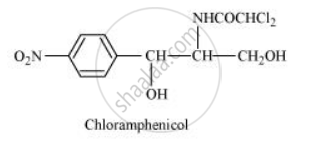
Antibiotics that are effective against a wide range of gram-positive and gram-negative bacteria are known as broad spectrum antibiotics. Chloramphenicol is a broad spectrum antibiotic.

It can be used for the treatment of typhoid, dysentery, acute fever, pneumonia, meningitis, and certain forms of urinary infections. Two other broad spectrum antibiotics are vancomycin and ofloxacin. Ampicillin and amoxicillin −synthetically modified from penicillin − are also broad spectrum antibiotics.
उत्तर २
Broad spectrum antibiotics are effective against several different types or wide range of harmful bacteria. For example, tetracycline, chloramphenicol and of loxacin. Chloramphenicol can be used in case of typhoid, dysentry, acute fever, urinary infections, meningitis and pneumonia.
उत्तर ३
Broad spectrum antibiotic: Antibiotics that are effective against a wide range of gram-positive and gram-negative bacteria are known as broad spectrum antibiotics. Chloramphenicol is a broad spectrum antibiotic.
संबंधित प्रश्न
How do antiseptics differ from disinfectants? Give one example of each.
What are the main constituents of dettol?
Compound which is added to soap to impart antiseptic properties is ______.
Which of the following are antidepressants?
(i) Iproniazid
(ii) Phenelzine
(iii) Equanil
(iv) Salvarsan
Which type of drugs come under antimicrobial drugs?
What is the commonality between the antibiotic arsphenamine and azodye?
What is the scientific explanation for the feeling of depression?
What is the basic difference between antiseptics and disinfectants?
Match the medicines given in Column I with their use given in Column II.
| Column I | Column II |
| (i) Ranitidine | (a) Tranquilizer |
| (ii) Furacine | (b) Antibiotic |
| (iii) Phenelzine | (c) Antihistamine |
| (iv) Chloramphenicol | (d) Antiseptic |
| (e) Antifertility drug |
Which of the following are antibacterial?
How many of the following drugs is/are example(s) of broad spectrum antibiotic?
Aminoglycosides are usually used as ______.
Which of the following was the first antiseptic used in surgery?
Which of the following was the first synthetic antimicrobial drug?
The linkage present in salvarsan is _______.
The antibacterial activity of prontosil is due to ________.
Who discovered the first antibiotic penicillin?
Limited spectrum antibiotics are __________.
