Advertisements
Advertisements
प्रश्न
What is the difference between ionic compounds and covalent compounds?
Advertisements
उत्तर
Ionic compounds:
- They are made up of ions and are generally crystalline solids with high melting and boiling points.
- They are soluble in water
- They are good conductors of electricity in aqueous solution and molten state.
- They are not true molecules, but rather a collection of positive and negative ions.
Covalent compounds:
- They are made up of molecules and can exist as soft solids or liquids or gases with low melting and boiling points.
- They are generally insoluble in water
- They are poor conductors of electricity.
- They are true molecules.
APPEARS IN
संबंधित प्रश्न
Draw the electron-dot structure of the following compound and state the type of bonding in the given case:
N2
The number of covalent bonds in pentane (molecular formula C5H12) is ______.
The following structural formula belongs to which carbon compound?
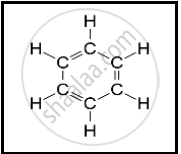
The carbon compound is used in daily life is ______.
Give examples for the following:
Two liquid non polar compounds.
State the type of bond formed when the combining atom has small E.N. difference.
Answer the following question.
What is methane? Draw its electron dot structure. Name the type of bonds formed in this compound. Why are such compounds:
(i) poor conductors of electricity? and
(ii) have low melting and boiling points? What happens when this compound burns in oxygen?
The bond between two oxygen atoms is _______ bond.
From the following hydrocarbon _______ is the cyclic hydrocarbon.
Two carbon atoms can always form one or two covalent bonds.
