Advertisements
Advertisements
प्रश्न
Advertisements
उत्तर
Dialysis is a process of separation of toxic substances from the blood stream through a membrane by kidney machine or artificial kidney.
APPEARS IN
संबंधित प्रश्न
The diagram given alongside shows a section of a human kidney. Study the diagram carefully and answer the questions that follow:
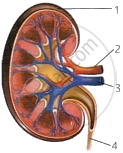
- Label the parts numbered 1 to 4.
- Why does part 2 have a striped appearance?
- What is the fluid that passes down part 4? Name the main nitrogenous waste present in it.
- Mention the structural and functional units of kidneys.
- Name the two major steps in the formation of the fluid mentioned in (c).
Why do some people need to use a dialysis machine? What does the machine do?
How are waste products excreted in Amoeba?
Name the following:
The outer region of kidney containing the Bowman's capsule.
Define the following term :
Renal pelvis
Study the diagram given alongside and then answer the question that follow:
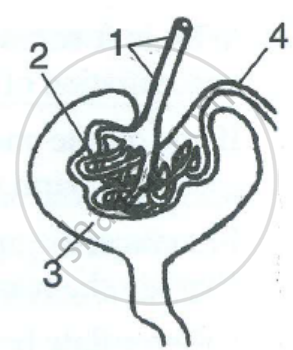
What is the technical term given to the process occurring in 2 and 3? Briefly describe the process.
Name the Following
The term used for Bowman’s capsule and glomerulus together.
Write the functional activity of the following structure: Renal vein
The CORRECT match is ______.
Give two examples of the following:
Nitrogenous waste
