Advertisements
Advertisements
प्रश्न
Thinking about the Poem
What is the snake trying to escape from?
Advertisements
उत्तर
The snake is trying to escape from the stick.
संबंधित प्रश्न
Match the meanings with the words/expressions in italic, and write the appropriate
meaning next to the sentence.
Wait until I tell his story — it will make your hair stand on end.
Lushkoff is earning thirty five roubles a month. How is he obliged to Sergei for this?
Answer these question in one or two sentences . (The paragraph numbers within brackets provide clues to the answer.)
When did she leave home for Delhi, and why?
Answer these question in one or two sentences . (The paragraph numbers within brackets provide clues to the answer.)
Why did Santosh’s parents agree to pay for her schooling in Delhi? What mental qualities of Santosh are brought into light by this incident?
Think of an occasion when you participated in a team competition. Think back on the leadership qualities displayed by your Team Leader/Captain. Recollect the specific incidents when those were displayed and how they contributed to the success of the team.
Write an e-mail to your mentor-teacher sharing this experience.
The Mystery of Bermuda Triangle.
In groups of six, work on one of the mysteries given below by surfing the net and through other sources. Create a power point presentation/a photo essay.
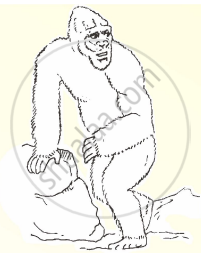
- Yeti, the abominable snowman
- Loch Ness Monster
- UFOs (Unidentified Flying Objects)
- Lost city of Atlantis
- Crop circles
- Nazca lines

What does he plant who plants a tree? a
He plants a friend of sun and sky;b
He plants the flag of breezes free;
The shaft of beauty, towering high;
He plants a home to heaven anigh;
For song and mother-croon of bird
In hushed and happy twilight heard____
The treble of heaven's harmony_____
These things he plants who plants a tree.
Read the lines given above and answer the question that follow:
Some are Purple and gold flecked grey
For she who has journeyed through life midway,
Whose hands have cherished , whose love has blest,
And cradled fair sons on her faithful breast,
And serves her household in fruitful pride,
And worship the gods at her husband's side.
Read the lines given above and answer the question that follow:
What in the passage will repel a modern woman?
'All right!' you 'll cry.'All right!' you'll say,
'But if we take the set away,
What shall we do to entertain
Our darling children?Please explain!'
We'll answer this by asking you,
'What used the darling ones to do?
'How used they keep themselves contented
Before this monster was invented?'
Have you forgotten? Don't you know?
We'll say it very loud and slow:
THEY ... USED ... TO ... READ! They'd READ and READ,
AND READ and READ, and then proceed
To READ some more. Great Scott! Gadzooks!
One half their lives was reading books!
The nursery shelves held books galore!
Books cluttered up the nursery floor!
And in the bedroom, by the bed,
More books were waiting to be read!
Read the lines given above and answer the question given below.
Explain with reference to context.
He flungs himself down in a corner to recoup from the fatigue of his visit to the shop. His wife said, “You are getting no sauce today, nor anything else. I can’t find anything to give you to eat. Fast till the evening, it’ll do you good. Take the goats and be gone now,” she cried and added, “Don’t come back before the sun is down.”
Read the extract given below and answer the question that follow.
What lie did Muni tell the shopkeeper?
She lighted another match, and then she found herself sitting under a beautiful Christmas-tree. It was larger and more beautifully decorated than the one which she had seen through the glass door at the rich merchant’s. Thousands of tapers were burning upon the green branches, and colored pictures, like those she had seen in the show- windows, looked down upon it all. The little one stretched out her hand towards them, and the match went out.
The Christmas lights rose higher and higher, till they looked to her like the stars in the sky. Then she saw a star fall, leaving behind it a bright streak of fire. “Someone is dying,” thought the little girl, for her old grandmother, the only one who had ever loved her, and who was now dead, had told her that when a star falls, a soul was going up to God.
Read the extract given below and answer the question that follow.
What happened when she stretched her hand to touch?
Read the extract given below and answer the questions that follow :
Bassanio: A gentle scroll. - Fair lady, by your leave; (Kissing her)
I come by not, to give and to receive.
Like one of two contending in a prize,
That thinks he hath done well in people's eyes
Hearing applause and universal shout
Giddy in spirit, still gazing, in a doubt
Whether those peals of praise be his or no;
(i) Where did Bassanio find the 'gentle scroll'? What 'prize' had Bassanio just won?
(ii) Explain why Basscmio said he felt 'Giddy in spirit, still gazing, in a doubt'.
(iii) Shortly after this exchange, Port: it gave Bassanio a ring as a token of her affection. What did the gift symbolize?
(iv) What assurance did Bassanio give her when he accepted the ring?
(v) What did Portia urge Bassanio to do when she learned that his friend Antonio was in trouble? What aspect of her character is revealed through her words?
The following sentence has two blanks. Fill in the blanks with appropriate forms of the word given in brackets.
The____________ said that only fresh evidence would make him change his___________. (judge)
What assurance did the sunrays give to Saeeda?
What surprises do the meadows have to offer you?
Multiple Choice Question:
When does the flier have to run?
What does the child think about his/her teacher?
What does the word ‘gong in the passage mean?____________.
Give a synonym for ‘like’ in the context of the poem.
