Advertisements
Advertisements
प्रश्न
The rDNA technology has provided a method to control the nematode parasite Meloidogyne incognita. Explain the principle involved in this technique.
Advertisements
उत्तर
RNA interference (RNAi) is a gene-silencing process that blocks the expression of genes in the parasite when it enters the host's body. This method is used to prevent infestation of roots of tobacco plants by a nematode Meloidogyne incognita. In RNAi, a complementary RNA binds to mRNA to form a dsRNA that cannot translate and hence its expression is blocked. Synthetic neurotransmitants mixed with dsRNA solutions are used for in vitro RNAi in plant-parasitic nematodes with significant success. This introduced DNA which forms both sense and anti-sense RNA. These two strands are complementary to each other bend and form dsRNA leading to RNA interference. mRNA of nematodes is thus silent and the parasite cannot survive in the transgenic host. Thus through this method tobacco plants can be protected from nematode attacks.
APPEARS IN
संबंधित प्रश्न
What would be the molar concentration of human DNA in a human cell?
What does PCR stand for? Describe the different steps of PCR
Write a short note on Electrophoresis.
What is the cell that receives a recombinant gene called?
Explain types of enzymes used in biotechnology?
The source of taq Polymerase used in PCR is a ______.
Nucleic acid segment tagged with a radioactive molecule is called ______.
Annealing step of PCR operates at ______ °C.
Name the source of thermostable DNA polymerase.
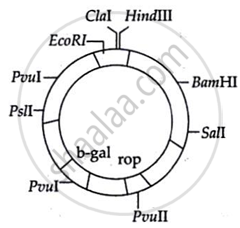
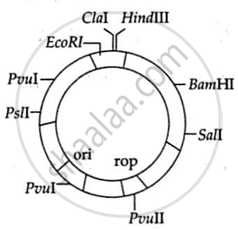
Suneeta is planning an experiment to clone a gene in a vector. So, she has to choose a good cloning vector.
Which one of the vectors shown below should she choose? Justify your answer by giving two reasons.
 |
 |
 |
| Vector A | Vector B | Vector C |
