Advertisements
Advertisements
प्रश्न
Ten bulbs are connected in a series circuit to a power supply line. Ten identical bulbs are connected in a parallel circuit to an identical power supply line.
(b) In which circuit, if one bulbs be brighter?
Advertisements
उत्तर
(b) Parallel circuit
संबंधित प्रश्न
One coulomb charge is equivalent to the charge contained in:
(a) 2.6 × 10¹⁹ electrons
(b) 6.2 × 10¹⁹ electrons
(c) 2.65 × 10¹⁸ electrons
(d) 6.25 × 10¹⁸ electrons
What Makes an Electric Current Flow in a Wire?
How do you think the brightness of two lamps arranged in parallel compares with the brightness of two lamps arranged in series (both arrangements having one cell)?
How does the heat H produced by a current passing through a fixed resistance wire depend on magnitude of current I?
If the current passing through a conductor is doubled, what will be the change in heat produced
Tell the odd one out. Give a proper explanation.
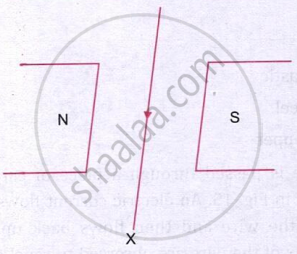
In fig. XY is at right angles to the magnetic field. The direction in which XY should be moved to induce an electron flow in the direction Y to X as indicated by the arrow is:
A bulb marked 12 V, 24 W operates on a 12 V battery for 20 minutes. Calculate:
- The current flowing through it, and
- The energy consumed.
State the condition when it is advantageous to connect cells in parallel.
Match the following:
| 1. | 1 mA | a. | series |
| 2. | 1 pA | b. | ohmmeter |
| 3. | Ammeter | c. | 10-6 ampere |
| 4. | Electrical resistivity | d. | 10-3 ampere |
The number of electrons constituting a 1-coulomb charge is ______.
The number of electrons required to produce a total charge of 1.6 C is:
