Advertisements
Advertisements
प्रश्न
Study the diagram given alongside and then answer the question that follow:
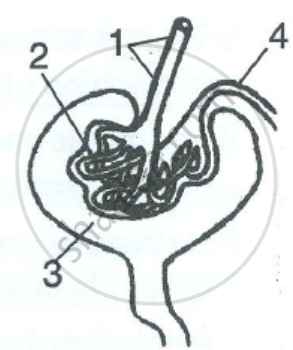
Name the parts labelled 1, 2, 3, and 4.
Advertisements
उत्तर
1 - Afferent arteriole
2 - Glomerulus
3 - Bowman's capsule
4 - Efferent arteriole
संबंधित प्रश्न
Describe the structure of nephrons.
Mention the exact location of the Prostate gland.
Name a waste gas released by the plants only during the night time.
Answer the following in detail.
Explain the process of transpiration. Describe some factors that affect it.
Given below is a set of five terms. Rewrite the terms in their correct order so as to be in logical sequence.
Renal artery, urethra, ureter, kidney, urinary bladder.
One of the following sets of body parts or substances or processed, pick out the one item which overall includes the remaining foir.
Skin, liver, lungs, kidneys, excretion.
State the Location: Renal pyramids
Write the functional activity of the following structure: Nephron
Choose the correct option.
The minor calyx _______.
The statement given below is false. Rewrite the correct form of the statement by changing the underlined word.
The pigment urochrome is the breakdown product of the haemoglobin of dead RBCs.
