Advertisements
Advertisements
प्रश्न
State the name of the functional unit concerned with sexual reproduction.
Advertisements
उत्तर
In plants, the flower is the functional unit concerned with the sexual reproduction of plants.
APPEARS IN
संबंधित प्रश्न
Write the names of those parts of a flower which serve the same function as the following do in the animals :
(i) testis,
(ii) sperm,
(iii) ovary,
(iv) egg
How is the process of pollination different from fertilization?
A flower may have either male or female reproductive parts. Such a flower is called ______.
Explain what you understand by sexual reproduction.
Mature ovary forms the ______.
Name the swollen lower part of the carpel.
Name the male part of the flower.
Fill in the following blank with suitable word :
Pollen grains contain ............ gametes of a plant.
Fill in the following blank with suitable word :
The ovule becomes a .......... after fertilisation.
Fill in the following blank with suitable word :
The female organ of reproduction in the flower is the...........
Fill in the following blank with suitable word :
The name of the structure in the flower in which the male gamete is formed is...........
Name the part of a seed which grows into root.
Which of the following statements are true for sexual reproduction in flowering plants?
(i) it requires two types of gametes
(ii) fertilisation is a compulsory event
(iii) it always results in the formation of zygote
(iv) offsprings formed are clones
(a) (i) and (iv)
(b) (i), (ii) and (iv)
(c) (i), (ii) and (iii)
(d) (ii), (iii) and (iv)
Multiple choice question. Tick (✓) the correct choice:
Unisexual flowers are found in
- mulberry
- mustard
- pea
- sunflower
Fill in the blanks:
A stamen consists of ______ and ________.
Explain the process of fertilisation in flowers.
Describe an activity to demonstrate phototropism.
List any two differences between pollination and fertilization.
Fill in the blank by selecting suitable word:
Transfer of pollen grains from the anther to the stigma is known as______________.
A student is observing the temporary mount of a leaf peel under a microscope. Draw a labelled diagram of the structure of stomata as seen under the microscope
Calyx : Sepals : : Corolla : ________________
Pollen grains from anther are transferred to the stigma.
Give scientific reason.
Fertilization in plants is called double fertilization.
Draw a neat and labelled diagram.
Double fertilization in angiosperms
Observe the figure below. Write functions of the labelled parts.

The male reproductive part of a flower is ______.
Identify the parts A, B, C, and D?
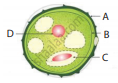
The anther wall consists of four wall layers where ______
Which of the following is the outermost protective layer of anther?
Identify the female gametophyte in angiosperms.
What would be the number of chromosomes in the cells of the aleurone layer in a plant species with 8 chromosomes in its synergids?
Pollen grains are produced by ______
Which among the following statements are true for sexual reproduction in flowering plants?
- It requires two types of gametes
- Fertilisation is a compulsory event
- It always results in formation of zygote
- Offspring formed are clones
Where is the zygote located in the flower after fertilization?
The ovaries of different flowers may contain ______.
Double fertilization means ______.
State the post-fertilisation changes that lead to fruit formation in plants.
- Assertion: Primary endosperm nucleus is diploid.
- Reason: It is the product of double fertilisation.
