Advertisements
Advertisements
प्रश्न
Name one solid, one liquid and one gaseous non-metal.
Advertisements
उत्तर
Carbon is a solid non-metal, bromine is a liquid non-metal and oxygen is a gaseous non-metal.
APPEARS IN
संबंधित प्रश्न
Fill in the blank
Any matter which has a definite _______ but no definite shape is called a _______
Fill in the blank
Liquids have a definite ______
Define matter. Give four examples of matter.
Bromine and air take about 15 minutes to diffuse completely but bromine diffuses into a vacuum very rapidly. Why is this so?
Which type of elements, metals or non-metals, show the property of brittleness ?
“Is malleable and ductile” best describes :
If 25 mL of acetone is present in 150 mL of its aqueous solution, calculate the concentration of solution.
Which of the following contains less solute at a given temperature and pressure ? Unsaturated solution or Saturated solution.
Define solvent.
Explain what happens when a beam of light is passed through a colloidal solution.
Which of the following are chemical changes and which physical ? Give reason.
- a glass bottle breaking
- coal burning in air
- making a cake
- wool being knitted into a sweater
What is the effect of temperature on the solubility of solids in liquids ?
Differentiate between a saturated and an unsaturated solution. How will you test whether a given solution is saturated or not ?
What difference in the property of two miscible liquids enables their separation by fractional distillation ?
Name the source from which nitrogen and oxygen are obtained on a large scale.
Name the process which can be used to recover salt from an aqueous salt solution.
What's the solution?
We need to make a sherbet quickly for some guests. But we only have sugar candy in the house.
Justify your answer.
| Figure 1 | Figure 2 | Figure 3 |
 |
 |
 |
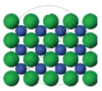
The arrangement of particles in three different phases of matter is shown above.
- Which state is represented by Fig. 1?
- In which state will the inter-particle attraction be maximum?
- Which one of them cannot be contained in an open vessel?
- Which one can take the shape of its container?
What type of matter glass is?
Celsius scale is a scale of temperature in which zero represents the melting point of ice and 100 represents the boiling point of water.
