Advertisements
Advertisements
प्रश्न
What is the effect of temperature on the solubility of solids in liquids ?
Advertisements
उत्तर
Solubility of solids in liquids generally increases on increasing the temperature and decreases on decreasing the temperature of the solvent.
APPEARS IN
संबंधित प्रश्न
What are the two conditions for the interconversion of states of matter ?
Honey is more viscous than water. Can you suggest why?
The best evidence for the existence and movement of particles in liquids was provided by :
What is meant by saying that metals are malleable and ductile?
Fill in the following blanks with suitable words :
Brass is an alloy which is considered a ..............
Define a compound. Give two points of evidence to show that sodium chloride is a compound.
What happens when the temperature of a saturated sugar solution is increased ?
Explain what happens when a beam of light is passed through a colloidal solution.
Which one of the following is not a chemical change ?
The solubility of ammonium chloride in water at various temperatures is given below :
| Temperature | : | 10°C | 20°C | 40°C | 60°C | 80°C |
| Solubility | : | 24 g | 37 g | 41 g | 55 g | 66 g |
What mass of ammonium chloride would be needed to make a saturated solution of ammonium chloride in fifty grams of water at 40°C ?
State whether the following statement are true or false :
Alcohol can be separated from a mixture of alcohol and water by a separating funnel.
Name the process by which the various gases of the air are separated.
Describe a method to separate a mixture of camphor and sand.
Describe the method of separating a mixture containing common salt, sand and ammonium chloride.
Describe a method for separating a mixture of iron filings and sulphur powder other than that by using a magnet.
How is cream separated from milk ?
Tincture of iodine is a mixture of two materials X and Y. The material Y has a property that its solid form can be converted directly into vapours on heating by a process called Z.
- What could X be ?
- What could Y be ?
- Name the process Z.
- Which process would you use to recover both the components X and Y from tincture of iodine ?
- Which process can be used to recover only component Y from tincture of iodine ?
Justify your answer.
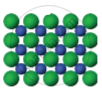
| Figure 1 | Figure 2 | Figure 3 |
 |
 |
 |
The arrangement of particles in three different phases of matter is shown above.
- Which state is represented by Fig. 1?
- In which state will the inter-particle attraction be maximum?
- Which one of them cannot be contained in an open vessel?
- Which one can take the shape of its container?
The particles in the matter are extremely small and can be seen even with a powerful microscope.
Atoms are tiny particles that repel each other when they are squeezed very close.
