Advertisements
Advertisements
प्रश्न
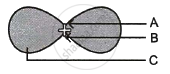
In the figure given alongside, the parts marked A, B and C are sequentially :
(a) cotyledon, plumule and radicle
(b) plumule, radicle and cotyledon
(c) plumule, cotyledon and radicle
(d) radicle, cotyledon and plumule
Advertisements
उत्तर
(c) plumule, cotyledon and radicle
A represents the plumule which forms the shoot. B represents the cotyledon and C represents the radicle which forms the roots.
APPEARS IN
संबंधित प्रश्न
Match the following:
| Column A | Column B |
| (i) Stigma | (a) Neuron |
| (ii) Pepsin | (b) Carpel |
| (iii) Dendrites | (c) Protein |
| (d) Stamen |
Name the parts A, B and C shown in the diagram and write their functions.

A student identified the various parts of an embryo of a gram seed and listed them as given below :
(I) Testa
(II) Plumule
(III) Radicle
(IV) Cotyledon
(V) Tegmen
Out of these the actual parts of the embryo are :
(A) I, II, III
(B) II, III, IV
(C) III, IV, V
(D) II, IV, V
Explain what you understand by sexual reproduction.
The process of fusion of the male and female gametes is called ______.
Where are the pollen grains produced?
What is the function of a flower?
What is made in anther of a flower?
Explain the terms 'self pollination'
How is the process of pollination different from fertilization?
Mention the function of Stigma.
“Cell division is a type of reproduction in unicellular organism.” Justify.
What is phototropism?
Draw a neat and labelled diagram.
Double fertilization in angiosperms
Explain the sexual reproduction process in plants with a diagram.
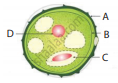
Identify the parts A, B, C, and D?
Double fertilization is essential for formation of ______.
Give any two examples of agents of pollination.
Triple fusion involves ______.
Given below is a diagram of a germinating seed. Label the parts that:
- gives rise to future shoot.
- gives rise to future root system.
- stores food.