Advertisements
Advertisements
प्रश्न
In a simple circuit, why does the bulb glow when you close the switch?
पर्याय
The switch produces electricity.
Closing the switch completes the circuit.
Closing the switch breaks the circuit.
The bulb is getting charged.
Advertisements
उत्तर
Closing the switch completes the circuit.
Explanation:
When you close the switch in a simple circuit:
- It completes the path for the electric current to flow.
- The electric current flows from the power source (like a battery), through the wires, the switch, and the bulb.
- The filament in the bulb heats up due to the flow of current, and as a result, the bulb glows.
APPEARS IN
संबंधित प्रश्न
What do you understand by the closed electric circuit
______ is the device used to close or open an electric circuit.
Draw the circuit diagram for the series connection.
Tabulate the different components of an electric circuit and their respective symbols.
The wiring in a house consists of ______ circuits.
In a circuit, if the key is in open (off) condition, then electricity will not flow.
In the following circuits (Figure), heat produced in the resistor or combination of resistors connected to a 12 V battery will be
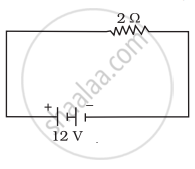 |
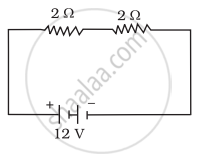 |
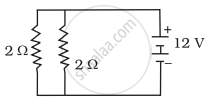 |
| (i) | (ii) | (iii) |
In an electrical circuit two resistors of 2 Ω and 4 Ω respectively are connected in series to a 6 V battery. The heat dissipated by the 4 Ω resistor in 5 s will be
In which of the following circuits A, B and C given in the following figure, the cell will be used up very rapidly?
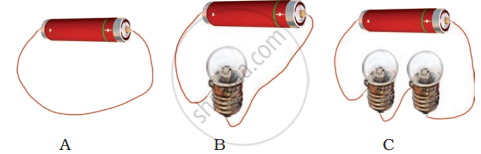
An electric motor rated 1100 W is connected to 220 V mains. Find:
- The current drawn from the mains,
- Electric energy consumed if the motor is used for 5 hours daily for 6 days.
- Total cost of energy consumed if the rate of one unit is 5.
