Advertisements
Advertisements
प्रश्न
Identify the character/speaker.
Oh no, I'll never get back to the right size.
Advertisements
उत्तर
Oh no, I'll never get back to the right size- Alice
APPEARS IN
संबंधित प्रश्न
Read the following extract and do the given activities:
B.1) Fill in the Balloons with suitable ideas from the poem:
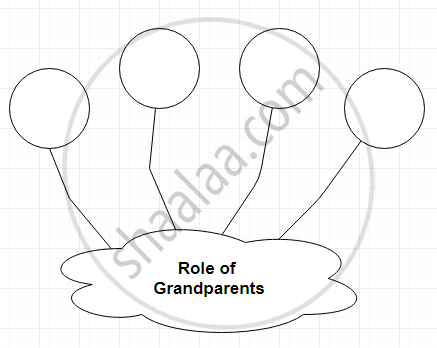 “Oh, the value of the elderly! How could anyone not know?
They hold so many keys, so many things they can show.
We all will read the other side this I firmly believe
And the elderly are closest oh what clues we could retrieve.
For their characters are closest to how we’ll be on high.
They are the ones most developed, you can see it if you try.
They’ve let go of the frivolous and kept things that are dear
The memories of so sweet, of loved ones that were near.
As a nation, we are missing our greatest true resource,
To get to know our elders and let them guide our course.”
B.2) Find Evidence:
Pick out the line from the extract which supports the given ideas:
(i) The elders have many things to share.
(ii) Everybody knows the value of elderly people.
(iii) The elderly people have vast experience.
(iv) The elderly people are a boon to the nation.
B.3) Write a pair from the extract that rhymes with the given word:
| Fear | ........................... | .......................... |
Read the story and complete the following.
Revathi won the prize for the ‘Best plant’ because, ____________.
The emperor-bee supervises the building of ______.
Refer to a good dictionary that carries phonetic transcriptions printed next to words. The word below is familiar to you. Copy the phonetic transcription from the dictionary and say it aloud as you write.
work ........
Answer the following question based on the reading of the story. Do not forget to go back to the passage whenever necessary to find and confirm the answer.
| Action | Effect |
| While you warm yourself | I will prepare the best tea. |
| I saved enough money | |
| Six hundred and two villages were destroyed. | |
| It was a terrible earthquake and it was felt | |
| I ran back to the village | |
| They lifted the door | |
| I went to thank the Army Officer |
Identify the speaker/character.
They somehow managed to put him on the platform.
Discuss in groups. Retell the story in your own words. Each one should say one sentence.
You can begin like this:
Gulliver was travelling in a ship. One stormy night, the ship was wrecked...
What did the five friends call themselves?
Write the word with same meaning.

post- ______
Write the compound words from the picture.
 |
 |
| ______ | |
