Advertisements
Advertisements
प्रश्न
Discuss in groups. Retell the story in your own words. Each one should say one sentence.
You can begin like this:
Gulliver was travelling in a ship. One stormy night, the ship was wrecked...
Advertisements
उत्तर
Gulliver was travelling in a ship. One stormy night, the ship was wrecked. Six of the crew„ members including Gulliver got into a boat and rowed. They were overturned by a big wave but Gulliver managed to reach an island, as he was a swimmer. He felt hungry and tired. So he slept on a patch of grass. When he woke up, he was unable to move his hands, legs, head and body. He was tied up with slender strings on each side and attached to pegs fixed on the ground. Later Gulliver understood that they were Lilliputians who were not six inches high. When Gulliver tried to free himself, the Lilliputians fired dozens of tiny arrows into his hand, face and body, until he was calm.
Gulliver asked for food and drink by signaling to-them with gestures. Gulliver slept ’’again and then he was transported to the capital on a large platform with twenty- two wheels pulled by dozens of four-and-half-inch horses. More than one hundred thousand Lilliputians came to see him. The Emperor received him and lodged him in an old and unused temple. After a few weeks, they decided that Gulliver meant them no harm. So they freed him. Gulliver stayed with them by helping them in many ways.
The neighboring kingdom of Blefuscu declared war on Lilliput. The king brought hundred ships to mount an attack. Gulliver helped them. He walked into the sea, tied all the hundred ships and dragged them in the water. Gulliver pulled the ships the whole day, going round and round until the army of Blefuscu was giddy and in no position to fight. The king of Blefuscu begged for peace between the two kingdoms. The Emperor agreed and Gulliver was the hero for them. After that Gulliver lived peacefully in Lilliput for many years.
APPEARS IN
संबंधित प्रश्न
Read the passage given below and answer the questions that follow:
The term dietary fibres refers collectively to indigestible carbohydrates present in plant foods. The importance of these dietary fibres came into the picture when it was observed that the people having diet rich in these fibres, had low incidence of coronary heart disease, irritable bowel syndrome, dental caries and gall stones.
The foodstuffs rich in these dietary fibres are cereals and grains, legumes, fruits with seeds, citrus fruits, carrots, cabbage, green leafy vegetables, apples, melons, peaches, pears etc.
These dietary fibres are not digested by the enzymes of the stomach and the small intestine whereas most of other carbohydrates like starch and sugar are digested and absorbed. The dietary fibres have the property of holding water and because of it, these get swollen and behave like a sponge as these pass through the gastrointestinal tract. The fibres add bulk to the diet and increase transit time in the gut. Some of these fibres may undergo fermentation in the colon.
In recent years, it has been considered essential to have some amount of fibres in the diet. Their beneficial effects lie in preventing coronary heart disease, and decreasing cholesterol level. The fibres like gums and pectin are reported to decrease postprandial (after meals) glucose level in blood. These types of dietary fibres are recommended for the management of certain types of diabetes. Recent studies have shown that the fenugreek (Methi) seeds, which contain 40 per cent gum, are effective in decreasing blood glucose and cholesterol levels as compared to other gum containing vegetables.
Some dietary fibres increase transit time and decrease the time of release of ingested food in colon. The diet having less fibres is associated with colon cancer and the dietary fibres may play a role in decreasing the risk of it.
The dietary fibres hold water so that stools are soft, bulky and readily eliminated. Therefore high fibre intake prevents or relieves constipation.
The fibres increase motility of the small intestine and the colon and by decreasing the transit time there is less time for exposure of the mucosa to harmful toxic substances. Therefore, there is a less desire to eat and the energy intake can be maintained within the range of requirement. This phenomenon helps in keeping a check on obesity. Another reason in helping to decrease obesity is that the high-fibre diets have somewhat lower coefficients of digestibility.
The dietary fibres may have some adverse effects on nutrition by binding some trace metals like calcium, magnesium, phosphorus, zinc and others and therefore preventing their proper absorption. This may pose a possibility of nutritional deficiency especially when diets contain marginal levels of mineral elements. This may become important constraints on increasing dietary fibres. It is suggested that an intake of 40 grams dietary fibres per day is desirable.
(Extracted from ‘The Tribune’)
(a) On the basis of your reading of the above passage make notes on it in points only, using recognizable abbreviations wherever necessary. Also suggest a suitable title.
(b) Write a summary of the above in about 80 words.
Comment on the influence of English – the language and the way of life – on Indian life as reflected in the story. What is the narrator's attitude to English?
What quality of 'beauty' and 'love' does the poem highlight?
Read the poem and write 3 qualities of the following.
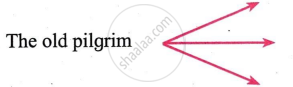
Name any four periods of History of British Drama.
Present any one of these announcements yourself, orally.
Read the lines and answer the questions.
Deep inside the mountain
the adventures hide themselves.
Where do adventures hide?
In early days, Amir left the tap opened.
Pick out word which mean the same as
not protected (para 2)
Write the compound words from the picture.
 |
 |
| ______ | |
